Before you read this page
This page builds on the Cell Recognition & the Immune System page — make sure you’re comfortable with helper T cells and the cellular response first.
What you need to know (based on the AQA specification)
What you need to know (based on the AQA specification)
- Structure of the human immunodeficiency virus (HIV) and its replication in helper T cells.
- How HIV causes the symptoms of AIDS.
- Why antibiotics are ineffective against viruses.
Human Immunodeficiency Virus (HIV) infects and destroys helper T cells — a key part of the body’s specific immune response.
Over time, helper T cell numbers drop. When they get low enough, the immune system can no longer fight pathogens effectively — this stage is called AIDS (Acquired Immunodeficiency Syndrome). The body becomes vulnerable to opportunistic infections (e.g. TB, pneumonia) and certain cancers, which cause the symptoms of AIDS.
Without helper T cells, which immune cells can no longer be activated — and what's the consequence?
Without helper T cells, which immune cells can no longer be activated — and what's the consequence?
Without helper T cells, the body cannot activate:
- Cytotoxic T cells (so virus-infected and cancerous cells aren’t destroyed)
- B cells (so antibodies aren’t produced in sufficient quantities)
- Phagocytes (so the non-specific response is also weakened)
- This means the immune system can no longer fight off infections
Structure of HIV
HIV is a retrovirus, which means its genetic material is RNA, not DNA.
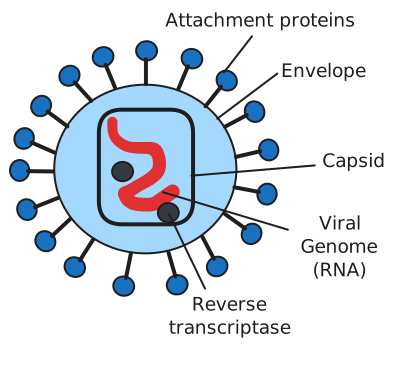
- RNA — the viral genome
- Reverse transcriptase — an enzyme that converts viral RNA into DNA inside the host cell
- Capsid — protein coat enclosing the genetic material
- Attachment proteins — on the surface, bind to receptors (CD4) on helper T cells
- Lipid envelope — outer layer (taken from the host cell membrane during budding)
Replication of HIV in Helper T Cells
HIV can only replicate inside a host cell — it has no ribosomes or enzymes of its own to make proteins.
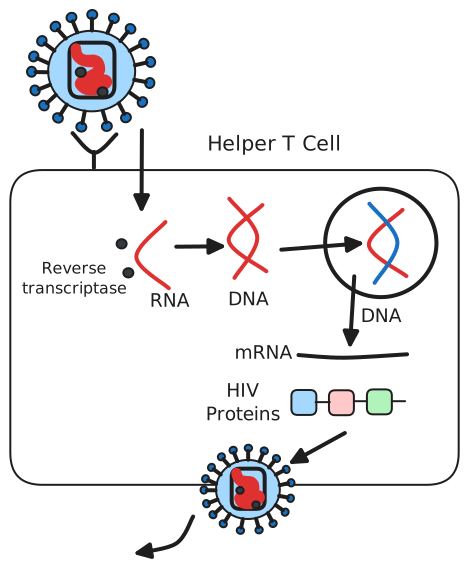
- The attachment protein on HIV binds to a CD4 receptor on the helper T cell
- The lipid envelope fuses with the host cell membrane, releasing the RNA and reverse transcriptase into the cell
- Reverse transcriptase converts the viral RNA into DNA (as the name suggests it’s the reverse of transcription)
- This viral DNA is incorporated into the host cell’s DNA (in the nucleus)
- The viral DNA is transcribed into mRNA, then host cell ribosomes translate the mRNA into viral proteins
- New HIV particles are assembled and bud off from the host cell (taking some membrane as the new lipid envelope), often killing the helper T cell
Antibiotics & Viruses
Why are antibiotics ineffective against viruses?
Antibiotics target structures or processes that are specific to bacteria — things humans either don’t have (e.g. cell walls / murein) or have a different version of (e.g. bacterial ribosomes are 70S; human ribosomes are 80S).
Viruses have none of these structures:
- Have no cell wall
- Have no ribosomes of their own (they use the host cell’s)
Viruses also live and replicate inside host cells, so anything that damages the virus would also damage your own cells.
This is why HIV (and other viral infections like flu, colds) can’t be treated with antibiotics — only antiviral drugs (e.g. reverse transcriptase inhibitors) work, by targeting virus-specific processes.
Exam Question Practice
Describe the structure of the human immunodeficiency virus (HIV).
(4 marks)Hint
Think of all the key components — what’s its genetic material, what enzyme is unique to HIV, what’s around the outside?
Mark Scheme
- RNA (as genetic material) (1 mark)
- Reverse transcriptase (1 mark)
- (Protein) capsomeres / capsid (1 mark)
- (Phospho)lipid (viral) envelope (1 mark)
- Attachment proteins (1 mark)
Tips from examiner reports
- Over half scored 4–5 marks
- Common error: referring to DNA as HIV’s genetic material — HIV has RNA
- Attachment proteins are NOT antibodies
- Later contradictions in the answer can negate correct earlier marks
Describe how the human immunodeficiency virus (HIV) is replicated once inside helper T cells (TH cells).
(4 marks)Hint
Start with reverse transcriptase converting RNA → DNA. Where does the DNA go next, and what does the host cell do with it?
Mark Scheme
- RNA converted into DNA using reverse transcriptase (1 mark)
- DNA incorporated/inserted into the (helper T cell) DNA/chromosome/genome/nucleus (1 mark)
- DNA transcribed into (HIV m)RNA (1 mark)
- (HIV mRNA) translated into (new) HIV/viral proteins (for assembly into viral particles) (1 mark)
Comments from mark scheme
- Reject “messenger” or “m” before RNA for the first conversion
- Accept descriptions of transcription / translation
- Accept named viral protein, e.g. capsid
- Reject “viral cells”
Tips from examiner reports
- Be specific: say “host cell ribosomes translate viral mRNA”, not just “cell machinery makes new viruses”
- Standard virus replication path: attachment → entry of genetic material → host cell produces viral components → assembly → release
Table 1 shows the action of two antibiotics.
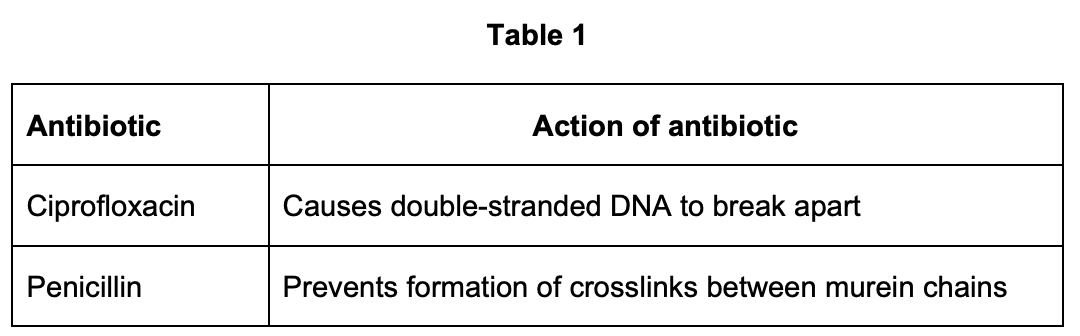
Using the information in Table 1, explain why each antibiotic is not effective against HIV.
- Ciprofloxacin =
- Penicillin =
Hint
What type of genetic material does HIV have? Remember viruses don’t have the same structures as bacteria or fungi.
Mark Scheme
- (Ciprofloxacin) HIV has RNA OR HIV does not have DNA (1 mark)
- (Penicillin) HIV has no cell wall OR HIV does not contain murein (1 mark)
Comments from mark scheme
- Ignore any prefixes to RNA
- Reject references to single-stranded DNA
- Reject any references to incorrect viral structures (e.g. “viruses have a cell membrane” or “a cell wall made of chitin”)
Tips from examiner reports
- HIV has RNA (single-stranded), not DNA
- Viruses don’t have cell walls or cell membranes — don’t describe these structures for viruses
- Don’t confuse viral structures with bacterial structures
Comments from mark scheme