DNA in Prokaryotic & Eukaryotic Cells
DNA is found in all living cells, but the way it is organised differs between prokaryotes and eukaryotes.
Prokaryotic DNA
Spec Point
Spec Point
In prokaryotic cells, DNA molecules are short, circular and not associated with proteins.
- DNA is found free in the cytoplasm (prokaryotes have no nucleus)
- DNA molecules are short and circular
- DNA is not associated with proteins (no histones)
- Prokaryotes may also contain additional small, circular DNA molecules called plasmids
Eukaryotic DNA
Spec Point
Spec Point
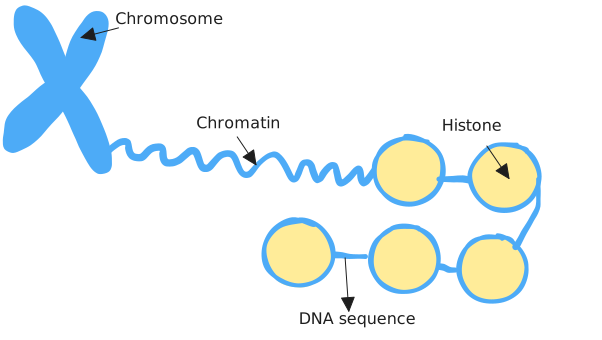
In the nucleus of eukaryotic cells, DNA molecules are very long, linear and associated with proteins, called histones. Together a DNA molecule and its associated proteins form a chromosome.
- DNA molecules are very long and linear
- DNA is associated with proteins called histones
- DNA wraps around histones, which helps to compact the DNA so it fits inside the nucleus
- Together, a DNA molecule and its associated histone proteins form a chromosome
Eukaryotic DNA (Organelles)
Spec Point
Spec Point
The mitochondria and chloroplasts of eukaryotic cells also contain DNA which, like the DNA of prokaryotes, is short, circular and not associated with protein.
- Mitochondria and chloroplasts also contain their own DNA. You might notice this when you look at the structures of Photosynthesis or Respiration
- This structure of the DNA is similar to prokaryotic DNA: short, circular and not associated with proteins
Tip
A common mistake is saying eukaryotic DNA is “circular”. Nuclear eukaryotic DNA is linear. The only circular DNA in eukaryotic cells is found in mitochondria and chloroplasts.
| Feature | Prokaryotic DNA | Eukaryotic (Nuclear) DNA | Eukaryotic (Organelle) DNA |
|---|---|---|---|
| Shape | Circular | Linear | Circular |
| Length | Short | Very long | Short |
| Associated with proteins | No | Yes (histones) | No |
| Location | Cytoplasm | Nucleus | Mitochondria / Chloroplasts |
Genes
Spec Point
Spec Point
A gene is a base sequence of DNA that codes for:
- the amino acid sequence of a polypeptide
- a functional RNA (including ribosomal RNA and tRNAs).
- A gene occupies a fixed position, called a locus, on a particular DNA molecule.
Hopefully, you’ve understood how DNA is different between prokaryotic and eukaryotic cells and where it fits within the cell.
Now we take a specific segment of this DNA (as shown in the image below) — this is a gene.
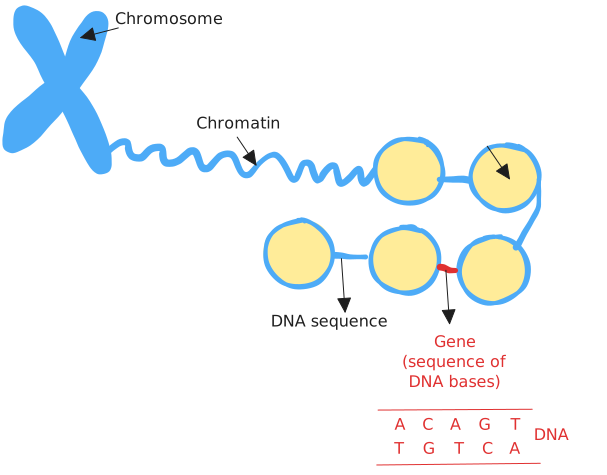
A gene is a sequence of DNA bases (nucleotides) that codes for either:
- The amino acid sequence of a polypeptide (a protein or part of a protein). Remember the sequence of amino acids in a polypeptide chain is called the Primary structure of a protein
- A functional RNA molecule, such as:
- tRNA (transfer RNA) - used in translation to carry amino acids to the ribosome
- rRNA (ribosomal RNA) - a structural and functional component of ribosomes
Locus (Gene’s Position)
Each gene occupies a specific, fixed position on a particular chromosome. This position is called a locus (plural: loci).
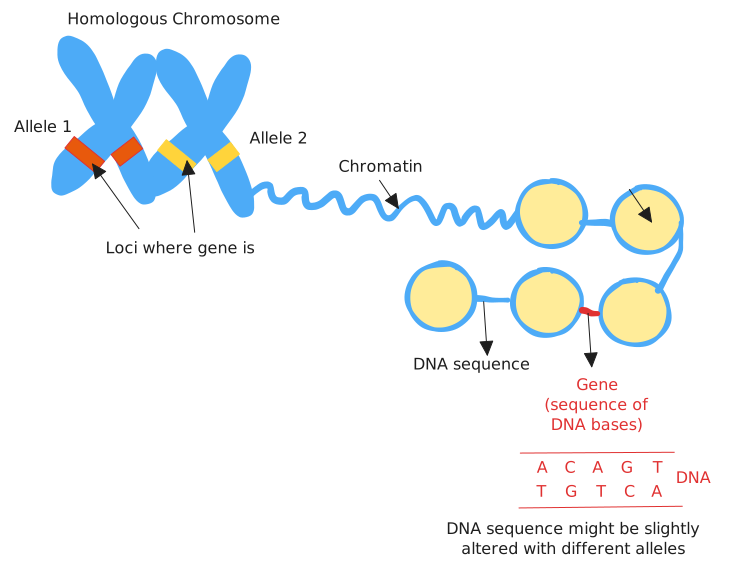
If you look at the image, you can see it’s showing 2 homologous chromosomes, each with 2 sister chromatids.
Why are there 2 chromatids not 1?
Why are there 2 chromatids not 1?
There are two chromatids because the DNA (in this image) has undergone replication. Each chromosome duplicates to form two identical sister chromatids joined at the centromere. If we looked before DNA replication, each homologous chromosome would consist of a single chromatid (one from each parent).
The gene is marked as allele 1 in the homologous chromosome on the left and allele 2 in the homologous chromosome on the right.
One allele might code for brown hair, and the other might code for blond hair. They are both the same gene, just different versions of it.
What is the difference between a gene and an allele?
What is the difference between a gene and an allele?
A gene is a sequence of bases that codes for a polypeptide or functional RNA. An allele is a different version of the same gene. Different alleles of a gene are found at the same locus on a chromosome, but have slightly different base sequences, which may result in a different amino acid sequence and therefore a different polypeptide/protein.
The Genetic Code
Spec Point
Spec Point
A sequence of three DNA bases, called a triplet, codes for a specific amino acid. The genetic code is universal, non-overlapping and degenerate.
The genetic code is the set of rules by which the base sequence of DNA is translated into a sequence of amino acids (a polypeptide).
Triplet Code
- A sequence of three DNA bases is called a triplet (or codon on mRNA)
- Each triplet codes for a specific amino acid
- Since there are 4 bases (A, T, C, G), there are 64 possible triplet combinations (4 x 4 x 4 = 64)
- There are only 20 amino acids, so some amino acids are coded for by more than one triplet codon. This is the idea of the degenerate nature of the genetic code. This is important in gene mutations, where even if there is a mutation in the DNA sequence, this might not cause a change in the sequence of amino acids (polypeptide chain)
Features of the Genetic Code
Key Features of the Genetic Code
- Universal - the same triplet codes for the same amino acid in all organisms
- Non-overlapping - each base is only part of one triplet; bases are read in consecutive, non-overlapping groups of three
- Degenerate - more than one triplet can code for the same amino acid
What does 'non-overlapping' mean?
What does 'non-overlapping' mean?
Each base in the DNA sequence is read only once and belongs to only one triplet. For example, in the sequence AATGCC:
- Non-overlapping reading: AAT | GCC (2 triplets)
- If it were overlapping: AAT, ATG, TGC, GCC (4 triplets)
The genetic code is non-overlapping, so the first reading is correct.
What does universal mean?
What does universal mean?
This means the same triplet codons code for the same amino acids in all species! So codon AUG codes for amino acid Met, in both bacteria and humans. This is important in recombinant DNA technology, as bacteria can use human DNA to produce human proteins
Why is the code described as 'degenerate'?
Why is the code described as 'degenerate'?
There are 64 possible triplet combinations but only 20 amino acids (plus stop codons). This means that most amino acids are coded for by more than one triplet. For example, the amino acid leucine is coded for by six different triplets. This is sometimes also called redundancy in the genetic code.
Non-Coding DNA
Spec Point
Spec Point
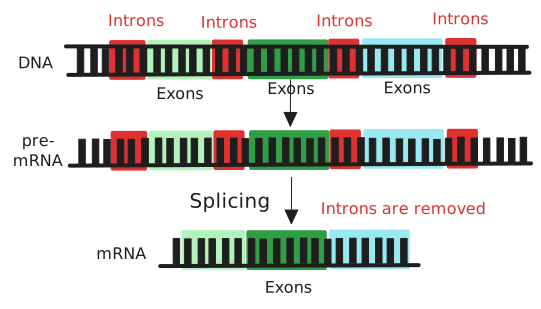
In eukaryotes, much of the nuclear DNA does not code for polypeptides. There are, for example, non-coding multiple repeats of base sequences between genes. Even within a gene only some sequences, called exons, code for amino acid sequences. Within the gene, these exons are separated by one or more non-coding sequences, called introns.
In eukaryotes, only a small proportion of nuclear DNA actually codes for polypeptides. The rest is non-coding DNA. This is one of the reasons why a mutation in the DNA sequence might not cause a change in the amino acid sequence. If a mutation is in the non-coding DNA region, it will have no effect on the protein produced.
Exons & Introns
- Exons - sequences of bases within a gene that do code for amino acids
- Introns - sequences of bases within a gene that do not code for amino acids
- Exons and introns alternate within a gene
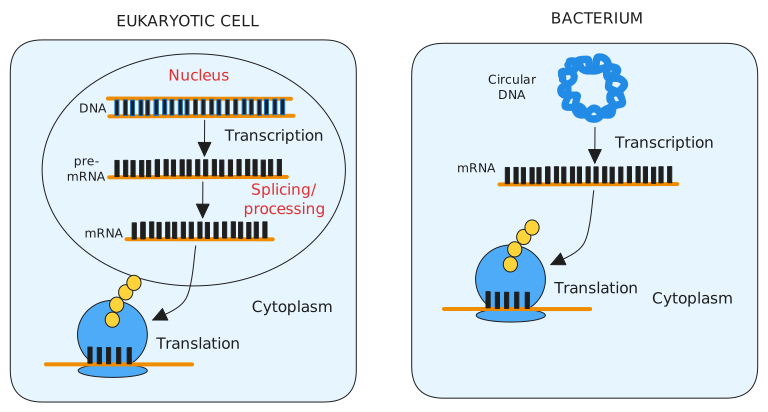
- During protein synthesis, introns are removed from the mRNA after transcription, a process called splicing. This ensures that only exons are translated into a polypeptide
Eukaryotic vs Prokaryotic
- Prokaryotic DNA often doesn’t contain these introns, so doesn’t undergo splicing like eukaryotic organisms
- This means that once a prokaryotic organism’s DNA is sequenced, it is easier to predict which proteins can be produced compared to eukaryotic organisms, as the initial DNA sequence in eukaryotes may contain introns. This comes up in Unit 8 determining the genome of simpler or more complex organisms
Non-Coding DNA Between Genes
- Much of eukaryotic DNA consists of sequences between genes that do not code for polypeptides
- These include multiple repeats of short base sequences
- These non-coding multiple repeats vary between individuals, which is the basis of DNA profiling / fingerprinting
Do prokaryotes have introns?
Do prokaryotes have introns?
Generally, no. Prokaryotic genes are mostly made up entirely of coding sequences (exons). Introns are a feature of eukaryotic genes. This is one of the differences between prokaryotic and eukaryotic gene structure.
What is the role of non-coding DNA?
What is the role of non-coding DNA?
Although non-coding DNA does not code for polypeptides, some of it has important regulatory functions. For example, some non-coding sequences can act as promoter regions that control when and how much a gene is expressed. However, much of non-coding DNA still has no known function.