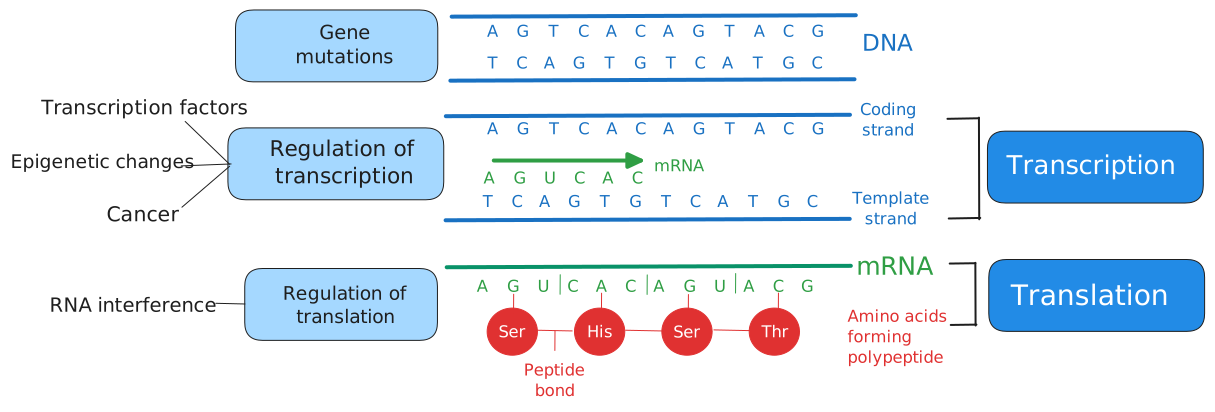
The diagram below outlines the ways in which gene expression (transcription and translation) can be controlled
- Regulation of transcription
- Transcription factors (Steroid hormones)
- Epigenetic changes
- Unregulated transcription (Cancer & gene expression)
- Regulation of translation
- RNA interference
Transcription Factors
What you need to know (based on the AQA specification)
What you need to know (based on the AQA specification)
In eukaryotes, transcription of target genes can be stimulated or inhibited when specific transcriptional factors move from the cytoplasm into the nucleus. The role of the steroid hormone, oestrogen, in initiating transcription.
-
Transcription of genes controlled by transcription factors
-
Transcription factors move to nucleus to bind to specific DNA sites of target genes (genes they want to control the expression of)
-
Activators: Increase rate of transcription
- Bind to specific DNA sites promoter region (or enhancer region)
- Increase transcription by stimulating the binding of RNA polymerase to the promoter
- RNA polymerase binds to the promoter region of a gene to initiate transcription
-
Repressors: Decrease rate of transcription
- Bind to specific DNA sequences called silencer regions
- Reduce transcription by preventing RNA polymerase binding to promoter
- As a result, RNA polymerase can’t bind to the promoter, so transcription is reduced or prevented
Oestrogen Receptor (TF)
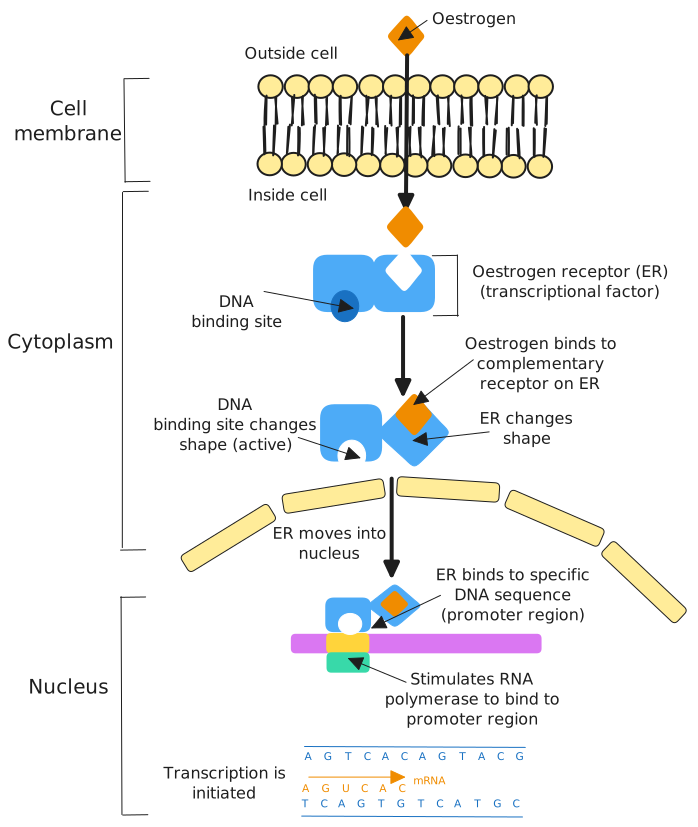
The image below shows an example of how the steroid hormone oestrogen initiates transcription.
Mechanism for ER
- Oestrogen is lipid soluble so diffuses through phospholipid membrane
- It binds to the complementary site of the transcription factor (Oestrogen Receptor, ER) inside the cytoplasm
- This binding of oestrogen causes the ER to change shape, along with its DNA binding site
- ER can now move into the nucleus and bind to specific DNA sites near start of target gene (promoter region).
- This stimulates RNA polymerase and allows it to bind to the promoter region
- This initiates transcription
Epigenetics
What you need to know (based on the AQA specification)
What you need to know (based on the AQA specification)
Epigenetic control of gene expression in eukaryotes. Epigenetics involves heritable changes in gene function, without changes to the base sequence of DNA. These changes are caused by changes in the environment that inhibit transcription by: increased methylation of the DNA or decreased acetylation of associated histones.
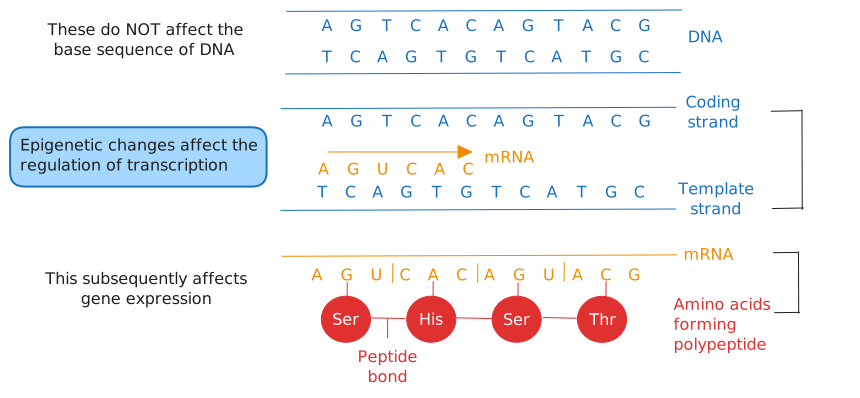
Epigenetics is the heritable changes in gene expression, without changes to the base sequence of DNA. These changes are caused by environmental factors and affect the regulation of transcription.
Epigenome
The epigenome is a collection of chemical marks on your DNA and histone proteins that act like switches, telling your genes when, where, and how strongly to turn on or off, without changing the DNA sequence itself.
The epigenome is flexible and can respond to environmental changes, e.g. stress, diet, and can affect how the genes are expressed.
- Directors cut analogy
A good way to think of it, is the genome is the script, and the epigenome is the director’s cut. Once the script has been agreed (fixed) the director can make edits to how they want the actors to play out the scene (I’m not a movie director so take this with a pinch of salt).
What are these chemical marks/modifications?
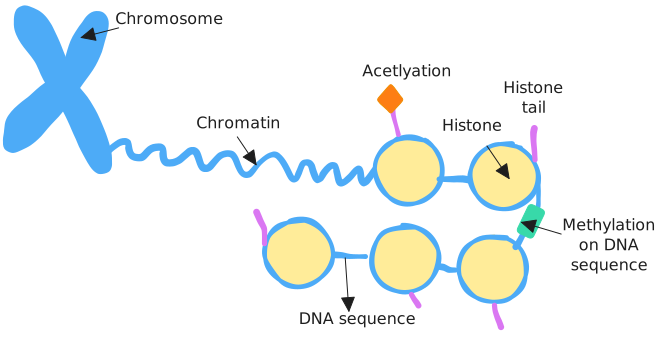
There are two main mechanisms of epigenetic control highlighted in image below
- Acetylation of histones
- Methylation of DNA
Acetylation of histones
Before discussing acetylation and deacetylation, it is important to understand that:
- Histone proteins have a positive charge (+)
- This is due to the presence of lysine residues on histone tails, which are positively charged.
- DNA has a negative charge (–)
- This is due to the phosphate groups in the DNA backbone, which are negatively charged.
- Adding or removing acetyl groups changes the charge on histones, affecting the attraction between histones and DNA.
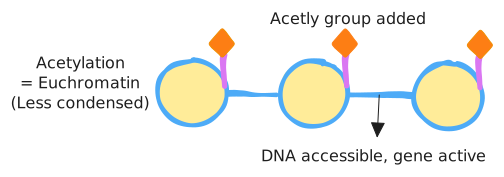
Acetylation
- Involves the addition of an acetyl group to histone tails, using acetyl-CoA
- Acetylation neutralises (reduces) the positive charge on the histones
- This reduces the attraction between the positively charged histones and negatively charged DNA
- As a result, chromatin becomes less condensed (forming euchromatin)
- DNA becomes more accessible to transcription factors and RNA polymerase, allowing gene transcription to occur
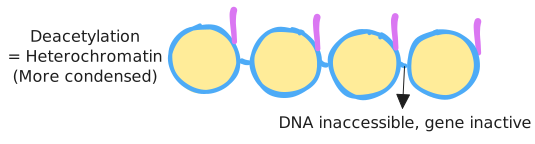
Deacetylation
- Histone deacetylation involves the removal of acetyl groups from histones
- Removal of acetyl groups restores the positive charge on histones
- This increases the attraction between positively charged histones and negatively charged DNA
- Chromatin becomes more tightly packed (forming heterochromatin)
- DNA becomes less accessible to transcription factors and RNA polymerase
- As a result, transcription is reduced or inhibited, and gene expression is decreased
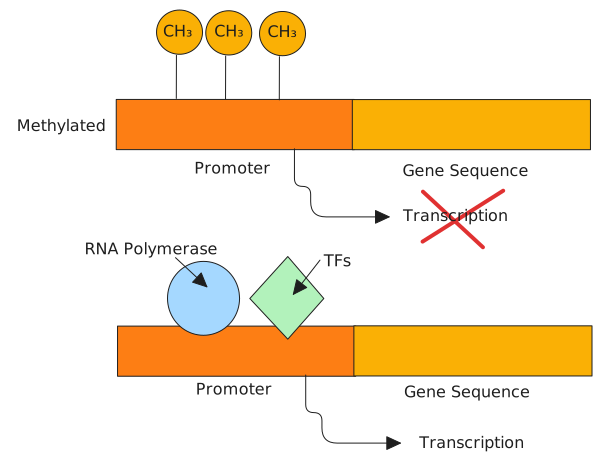
Methylation of DNA
- Involves the addition of a methyl group (–CH3) to DNA sequence (cytosine bases)
- This prevents transcription factors and RNA polymerase from binding to promoter
- This inhibits transcription and expression of the specific gene is reduced or silenced
What you need to know (based on the AQA specification)
What you need to know (based on the AQA specification)
The relevance of epigenetics on the development and treatment of disease, especially cancer.
Epigenetics plays a role in normal development but can also contribute to disease, such as cancer. For example, cancer cells may show increased DNA methylation of certain genes, causing these genes to be silenced. Potential epigenetic treatments include drugs that inhibit DNA methylation or histone deacetylation, which can lead to the reactivation of genes that have been silenced.
Further detail on cancer and epigenetics is covered in Gene Expression & Cancer
Epigenetics and inheritance
-
Epigenetic markers (e.g histone modification, methylation) can be passed from parent cell to daughter cells within the same individual. For example, when liver cells divide by mitosis, epigenetic markers are maintained in the daughter cells. This helps to preserve cell identity, so liver cells remain liver cells.
-
Some evidence exists to say that epigenetic changes may also persist across generations and be passed to offspring, influencing the gene expression of the offspring. However, the evidence is limited and context dependent.
RNA Interference
What you need to know (based on the AQA specification)
What you need to know (based on the AQA specification)
In eukaryotes and some prokaryotes, translation of the mRNA produced from target genes can be inhibited by RNA interference (RNAi).
How does RNA interference work?
- A small RNA molecule, small interfering RNA (siRNA) can inhibit the translation of mRNA into polypeptide, silencing gene expression for specific proteins.
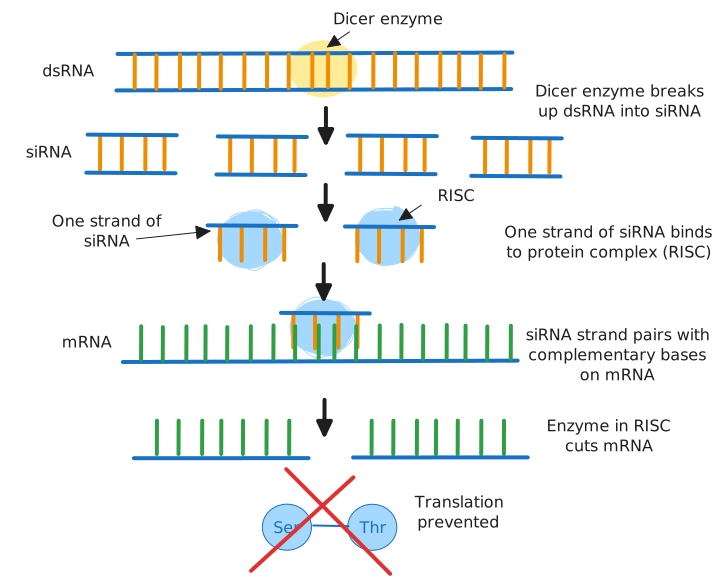
Mechanism for RNA interference
- Dicer enzyme breaks up double stranded RNA (dsRNA) into siRNA
- One strand of siRNA binds to a protein complex, RNA-induced silencing complex (RISC)
- The RISC-siRNA complex can bind to the target mRNA.
- The siRNA strand pairs with complementary bases on mRNA
- The enzyme within the protein complex cuts mRNA
- The mRNA is degraded and cannot be translated into a polypeptide, so the protein is not produced and the gene is not expressed
I thought RNA was single stranded?
I thought RNA was single stranded?
RNA is usually single stranded, such as mRNA. However, double stranded (dsRNA) can occur in some instances, e.g viruses.
Additional For Interest
RNA interference has potential therapeutic applications because it can be used to silence the expression of specific genes whose protein products cause or contribute to disease. https://www.alnylam.com/our-science/the-science-of-rnai
Exam Question Practice
Recent research has indicated that several cancers result from epigenetic abnormalities.
Treatment with drugs might be able to reverse the epigenetic changes that cause cancers. Suggest and explain how.
(4 marks)Hint
Think about how methylation and acetylation affect oncogenes vs tumour suppressor genes differently.
Mark Scheme
- Drugs could increase methylation of oncogene(s) — methylation silences genes, so this would switch off the cancer-driving oncogene (1 mark)
- Drugs could decrease methylation of tumour suppressor gene(s) — removing methyl groups allows the tumour suppressor gene to be expressed again (1 mark)
- Increased methylation of DNA prevents transcription factors and RNA polymerase from binding, inhibiting gene expression; decreased methylation has the opposite effect, stimulating transcription (1 mark)
- Decreased acetylation of histones increases their positive charge, so they bind more tightly to DNA, condensing the chromatin and inhibiting transcription; increased acetylation reduces this attraction, opening up the chromatin and promoting transcription (1 mark)
Effective treatment of ER-positive breast cancers often involves the use of drugs which have a similar structure to oestrogen.
Suggest and explain how these drugs are an effective treatment of ER-positive breast cancers.
(3 marks)Hint
Think about competitive inhibition - what happens if a similar-shaped molecule binds to the receptor instead?
Mark Scheme
- Because the drug has a similar shape to oestrogen, it binds to the oestrogen receptor (ER) — acting like a competitive inhibitor (1 mark)
- The drug occupying the receptor prevents oestrogen from binding to it (1 mark)
- Without oestrogen bound, the transcription factor cannot bind to the promoter region of the target gene, so RNA polymerase is not stimulated and transcription of genes driving cell division does not occur (1 mark)
Describe how alterations to tumour suppressor genes can lead to the development of tumours.
(3 marks)Hint
Think about what can alter a gene (mutation or epigenetic change) and what tumour suppressor genes normally do.
Mark Scheme
- Increased methylation of the tumour suppressor gene’s promoter region, or a mutation within the gene, can inactivate it (1 mark)
- As a result, the tumour suppressor gene is not transcribed/expressed (methylation blocks transcription), or a mutation produces an altered amino acid sequence and non-functional protein (1 mark)
- Without functional tumour suppressor proteins to regulate the cell cycle, cells undergo rapid, uncontrollable cell division, forming a tumour (1 mark)
CENP-W is involved in the formation of spindle fibres in mitosis. Spindle fibres are made of molecules of a protein called tubulin.
The scientists treated cells in a culture with small interfering RNA (siRNA). This siRNA causes RNA interference of expression of the CENP-W gene. The scientists took samples of cells at 0, 48 and 72 hours after adding the siRNA. They then used gel electrophoresis to separate CENP-W and tubulin from these samples.
Figure 5 shows the results of the electrophoresis. The size of each band is proportional to the amount of CENP-W or tubulin present.
Suggest how the siRNA produced these results.
(3 marks)Hint
Think about what siRNA binds to and prevents, and how CENP-W relates to tubulin production.
Mark Scheme
- The siRNA-RISC complex binds to the mRNA coding for CENP-W (due to complementary base pairing), causing the mRNA to be degraded (1 mark)
- With no CENP-W mRNA available, translation of CENP-W cannot occur and no CENP-W protein is produced (1 mark)
- As CENP-W is required for spindle fibre formation (which uses tubulin), as CENP-W levels fall, tubulin production also decreases over time (1 mark)