Respiration — Key Points
Overall equation: C₆H₁₂O₆ + 6O₂ → 6CO₂ + 6H₂O + energy (ATP)
Glycolysis (cytoplasm, doesn’t require oxygen)
- Glucose phosphorylated using 2 ATP → glucose phosphate → 2x triose phosphate
- TP oxidised to 2x pyruvate — hydrogen transferred to NAD → reduced NAD. ATP produced by substrate level phosphorylation (phosphate transferred from substrate to ADP)
- Net gain: 2 ATP, 2 reduced NAD, 2 pyruvate
Link Reaction (mitochondrial matrix)
- Pyruvate oxidised to acetate → combines with coenzyme A → acetyl CoA
- Per glucose: 2 acetyl CoA, 2 reduced NAD, 2 CO₂
Krebs Cycle (mitochondrial matrix)
- A series of redox reactions — intermediates are oxidised (lose hydrogen/electrons), while NAD/FAD are reduced (gain hydrogen/electrons)
- Acetyl CoA (2C) + oxaloacetate (4C) → citrate (6C) → 5C → 4C (oxaloacetate regenerated)
- Decarboxylation: CO₂ removed at 6C→5C and 5C→4C
- Dehydrogenation: hydrogen transferred to NAD/FAD (oxidation of intermediates)
- Per glucose (2 turns): 4 CO₂, 2 ATP, 6 reduced NAD, 2 reduced FAD
Oxidative Phosphorylation (inner mitochondrial membrane)
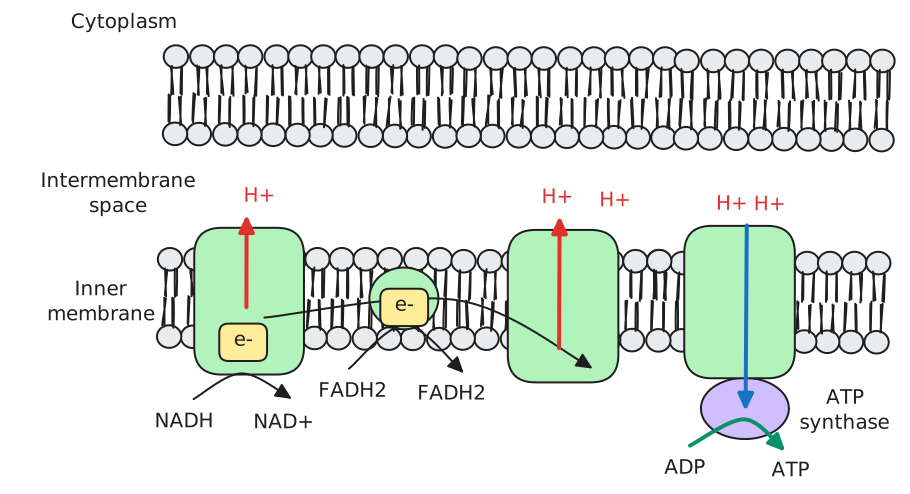
- Reduced NAD/FAD donate hydrogen → splits into H⁺ and electrons
- Electrons pass down electron transport chain, losing energy
- This energy is used to pump H⁺ into intermembrane space → which creates an electrochemical gradient
- H⁺ ions move down their concentration gradient from intermembrane space back into the matrix, passing through ATP synthase — this movement drives the production of ATP (chemiosmosis)
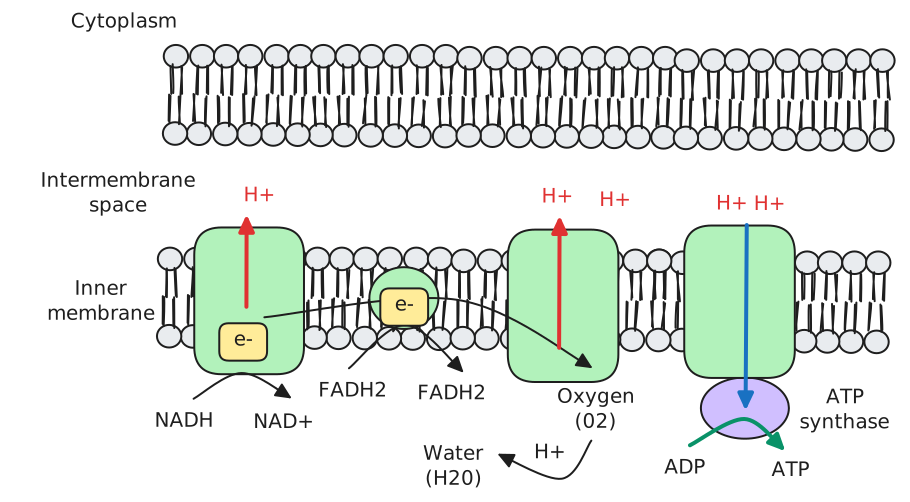
- Oxygen is the final electron acceptor → combines with H⁺ and electrons → water
Anaerobic Respiration (no oxygen)
- Glycolysis still occurs → pyruvate converted to ethanol (yeast) or lactate (animals)
- Regenerates NAD so glycolysis can continue
- Much less ATP produced than aerobic
Overview
What you need to know (based on the AQA specification)
What you need to know (based on the AQA specification)
Respiration produces ATP
What is respiration?
Remember in Photosynthesis, we saw that light energy was converted into chemical energy in the form of glucose.
But, cells cannot use glucose directly as a source of energy - they can only use ATP for their immediate energy needs.
Respiration is a process which breaks down the glucose, releasing energy to make this ATP
Why can't cells just use glucose directly instead of ATP?
Why can't cells just use glucose directly instead of ATP?
Cells release energy from glucose in small, controlled steps rather than all at once. If the energy in glucose were released directly in a single reaction, it could release too much energy at once, leading to problems such as excess heat and damage to proteins or cell membranes. ATP acts as an energy transfer molecule, allowing energy to be released only when and where it is needed.
Respiration
Glucose + oxygen → carbon dioxide + water + energy (ATP) C₆H₁₂O₆ + 6O₂ → 6CO₂ + 6H₂O + energy (ATP)
Why is respiration needed?
Since respiration produces ATP (immediate energy source for cells), it has many uses in cells for energy requiring process - see Hydrolysis & Synthesis ATP
Overview of Respiration
There are two main types of respiration
- Aerobic
- Requires oxygen
- Produces lots of ATP
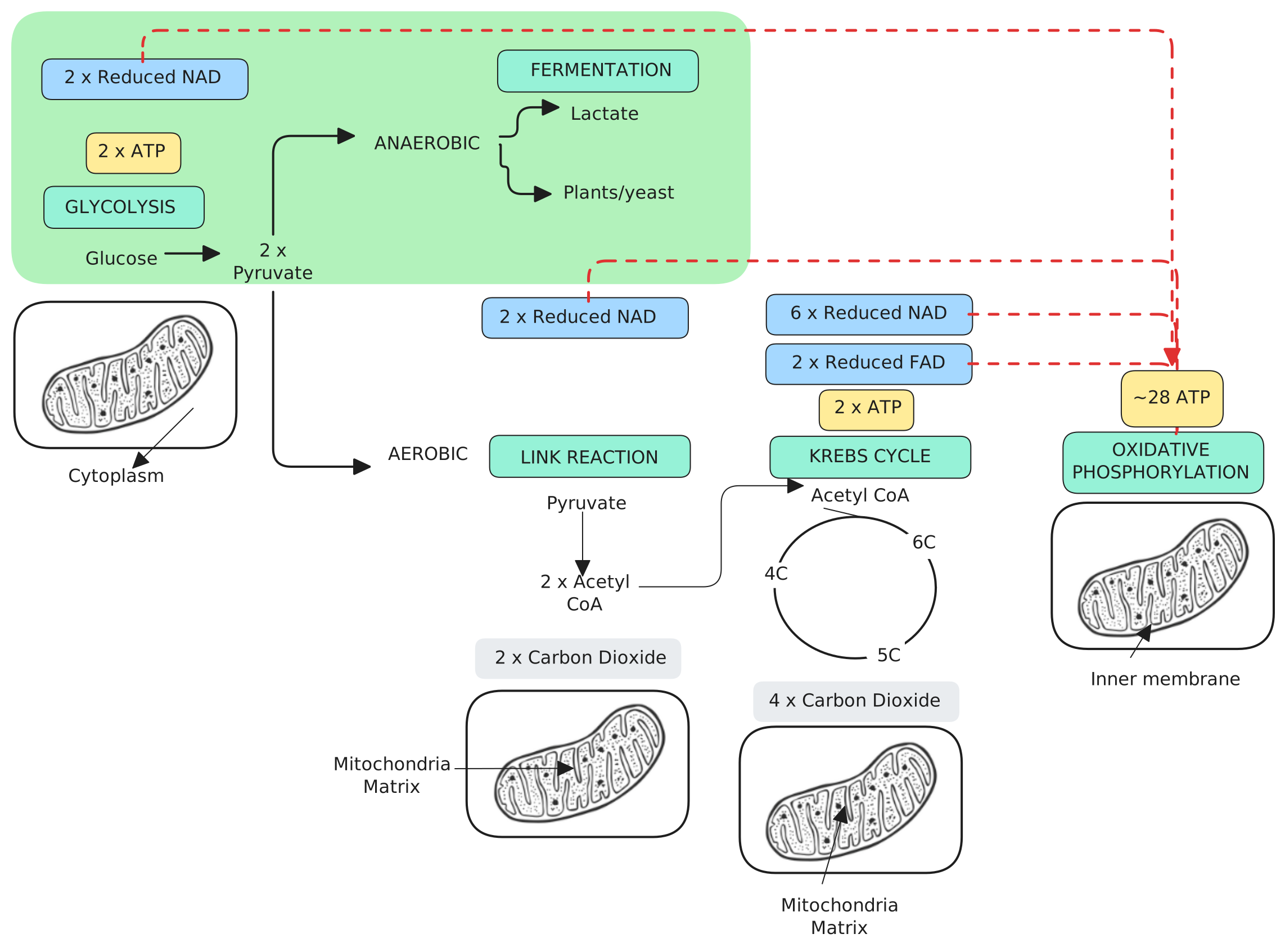
- Stages: Glycolysis, Link reaction, Krebs cycle & Oxidative Phosphorylation
- Anaerobic
- Without oxygen
- Produces minimal ATP
- Stages: Glycolysis, Fermentation (Alcoholic for plants & yeast or Lactate for animals)
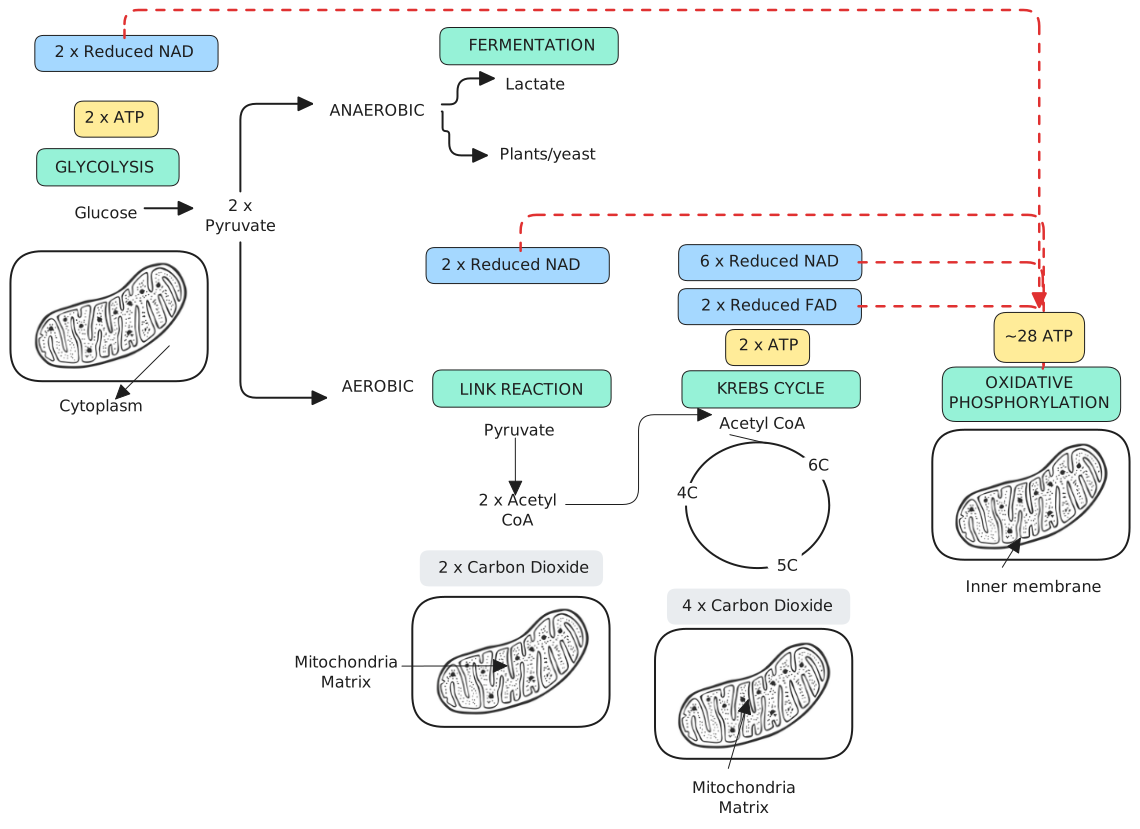
There are 4 main phases of aerobic respiration
- Glycolysis
- Link reaction
- Krebs cycle
- Oxidative phosphorylation
Glycolysis
What you need to know (based on the AQA specification)
What you need to know (based on the AQA specification)
Glycolysis is the first stage of anaerobic and aerobic respiration. It occurs in the cytoplasm and is an anaerobic process. Glycolysis involves the following stages: phosphorylation of glucose to glucose phosphate, using ATP production of triose phosphate oxidation of triose phosphate to pyruvate with a net gain of ATP and reduced NAD.
Glycolysis occurs in the cytoplasm of the cell and doesn’t require oxygen (it’s a step in both aerobic and anaerobic). It produces pyruvate which can be transferred to the link reaction
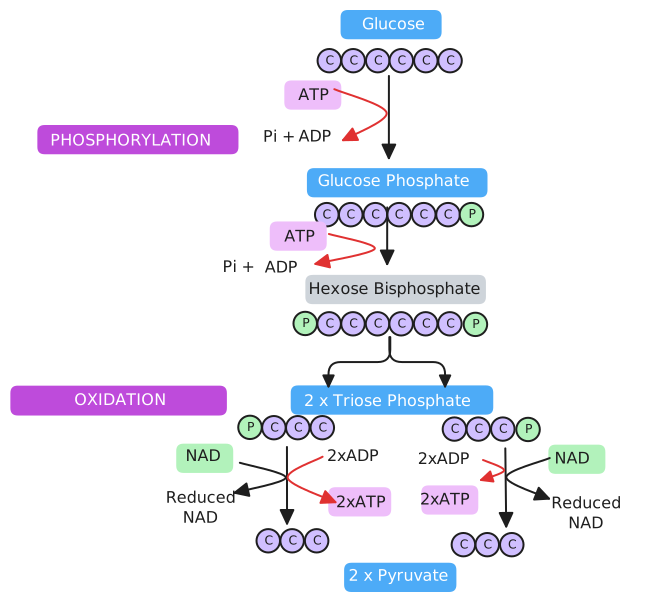
Steps in Glycolysis
- Phosphorylation to glucose phosphate
- Glucose is phosphorylated using two ATP molecules to glucose phosphate
- Note: Glucose phosphate is on the AQA specification, but the image here shows an additional step of hexose bisphosphate (with 2 phosphate groups on) - this is just for understanding of ‘where did the other phosphate from ATP go’?
- Hexose bisphosphate is highly reactive and unstable so splits into 2 molecules of triose phosphate
- Triose phosphate is oxidised and forms 2 molecules of pyruvate
- Hydrogen is removed and transferred to NAD to form NADH (reduced NAD)
- ATP is produced
- 4 ATP is produced
- Net gain of 2 ATP (as 2 were used up in phosphorylation step)
Extra detail/not required: Why are 2 ATP produced in the oxidation of each triose phosphate, if they only start with 1 phosphate?
The diagram above is simplified for the exam specification, so it doesn’t show every intermediate step. Below is a full pathway diagram for reference (to help with overall understanding). You are not expected to know or understand this.
Image credit: Glycolysis pathway 2.png by Eunice Laurent is licensed under the Creative Commons Attribution-ShareAlike 4.0 International (CC BY-SA 4.0) license.
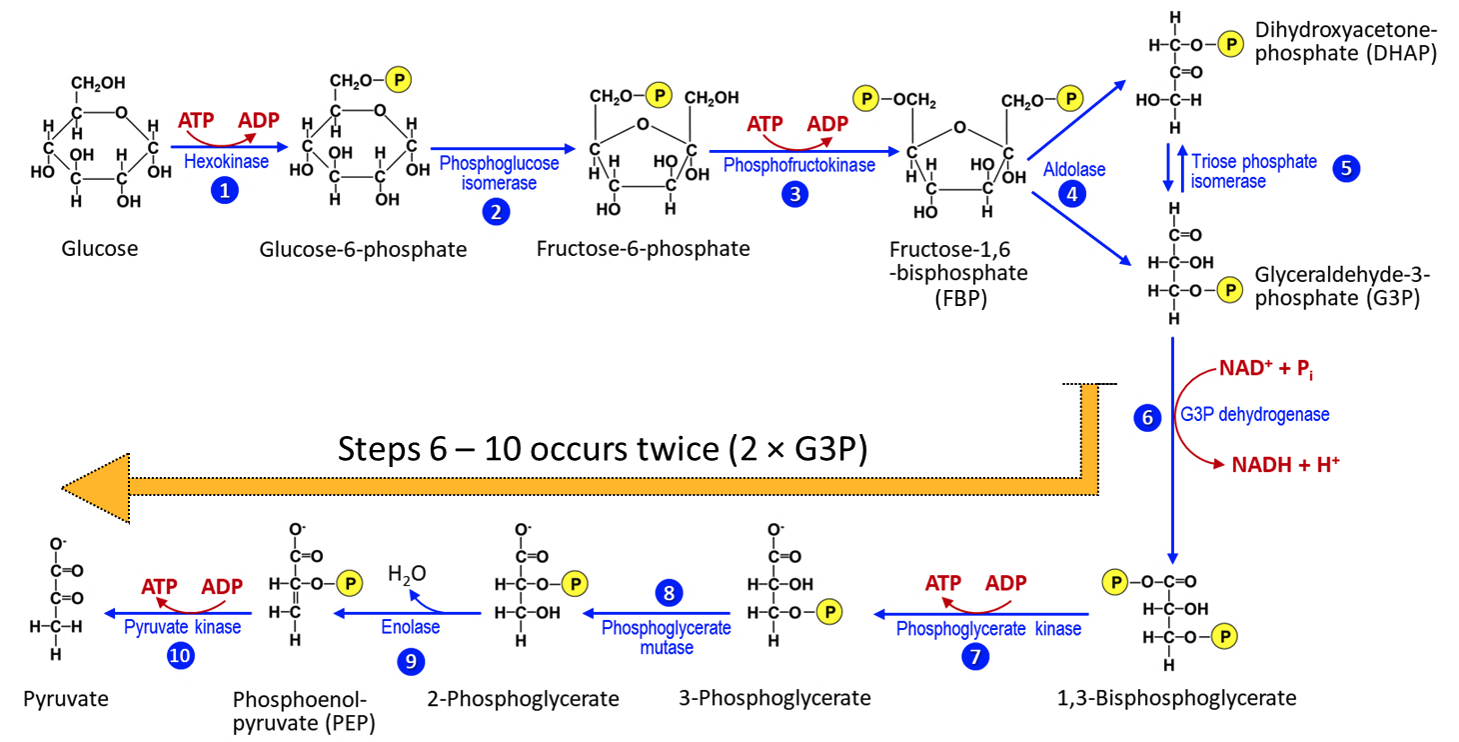
- Triose phosphate is oxidised and NAD+ is reduced to NADH. At the same time, an inorganic phosphate (Pi) from the cytosol is added to form 1,3-bisphosphoglycerate (1,3-BPG), which now has two phosphates.
- One phosphate is transferred from 1,3-BPG to ADP to form ATP (1,3-BPG to 3-phosphoglycerate).
- Later, the remaining phosphate is transferred to ADP to form a second ATP (PEP to pyruvate).
In aerobic respiration, the 2 molecules of pyruvate can be transported to the matrix of the mitochondria, for the link reaction
Active transport is required to transport pyruvate across the double membrane of the mitochondria.
Link Reaction
What you need to know (based on the AQA specification)
What you need to know (based on the AQA specification)
If respiration is aerobic, pyruvate from glycolysis enters the mitochondrial matrix by active transport. Aerobic respiration in such detail as to show that:
- pyruvate is oxidised to acetate, producing reduced NAD in the process
- acetate combines with coenzyme A in the link reaction to produce acetylcoenzyme A
The link reaction
Converts pyruvate (2) into acetyl CoA (2), which then goes into the Krebs cycle
Steps in Link Reaction
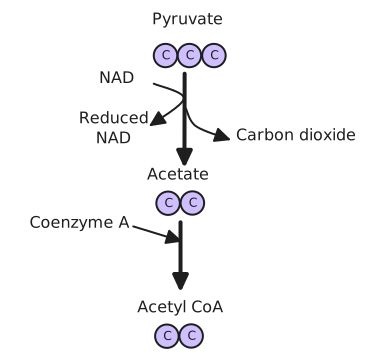
- Pyruvate is oxidised to acetate, producing reduced NAD
- Acetate then combines with a coenzyme A, this forms acetyl coenzyme A (shortened to acetyl CoA)
- Products from the link reaction from 1 molecule of glucose (remember 1 molecule produces 2 pyruvates)
- 2 acetyl CoA - this will feed into the Krebs cycle
- 2 reduced NAD - this will go into oxidative phosphorylation
- 2 carbon dioxide - produced as a waste product
Krebs Cycle
What you need to know (based on the AQA specification)
What you need to know (based on the AQA specification)
acetylcoenzyme A reacts with a four-carbon molecule, releasing coenzyme A and producing a six-carbon molecule that enters the Krebs cycle. In a series of oxidation-reduction reactions, the Krebs cycle generates reduced coenzymes and ATP by substrate-level phosphorylation, and carbon dioxide is lost
The Krebs cycle takes place in the mitochondrial matrix. It’s a series of oxidation-reduction reactions (redox).
What do we mean when we say 'oxidation-reduction reactions?'
What do we mean when we say 'oxidation-reduction reactions?'
- Intermediates in the Krebs cycle (e.g citrate, 5C & many others you don’t need to know about) are oxidised, meaning they lose electrons and hydrogen. The hydrogen is then used to reduce the coenzymes NAD/FAD
- NAD and FAD coenzymes are reduced, which means they gain electrons & hydrogen
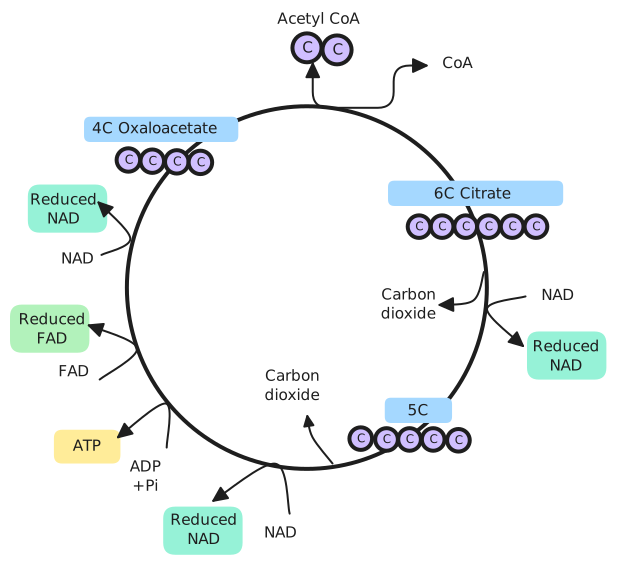
Steps in Krebs Cycle
- Acetyl CoA (2C) reacts with a 4C molecule (Oxaloacetate), releasing coenzyme A and producing a six-carbon molecule (Citrate)
Where do you think the coenzyme A goes to?
Where do you think the coenzyme A goes to?
- It gets recycled back to the link reaction
- The six-carbon molecule (Citrate) is converted to 5C molecule
- Dehydrogenation = The hydrogen atoms are lost and are taken up by NAD to produce reduced NAD
- Decarboxylation = carbon dioxide is removed (6C-> 5C)
- The 5C compound is converted to 4C (Oxaloacetate)
- There are lots of intermediate compounds here (you don’t need to know these)
- Decarboxylation = carbon dioxide is removed (5C->4C)
- Dehydrogenation & oxidation of intermediate compounds
- Hydrogen is removed and used to produce 2 x reduced NAD and 1 x reduced FAD
- ATP is produced by substrate level phosphorylation
- Phosphate group is directly transferred from one of the intermediates molecule to ADP to form ATP
Products from the Krebs Cycle
Important to note that for 1 molecule of glucose, this produces 2 x pyruvate, so 2 x Acetyl CoA, so the Krebs cycle goes round twice
- 4 x carbon dioxide (2 for each turn)
- 2 x ATP (1 for each turn)
- 6 x reduced NAD (3 for each turn)
- 2 x reduced FAD (1 for each turn)
What is substrate level phosphorylation?
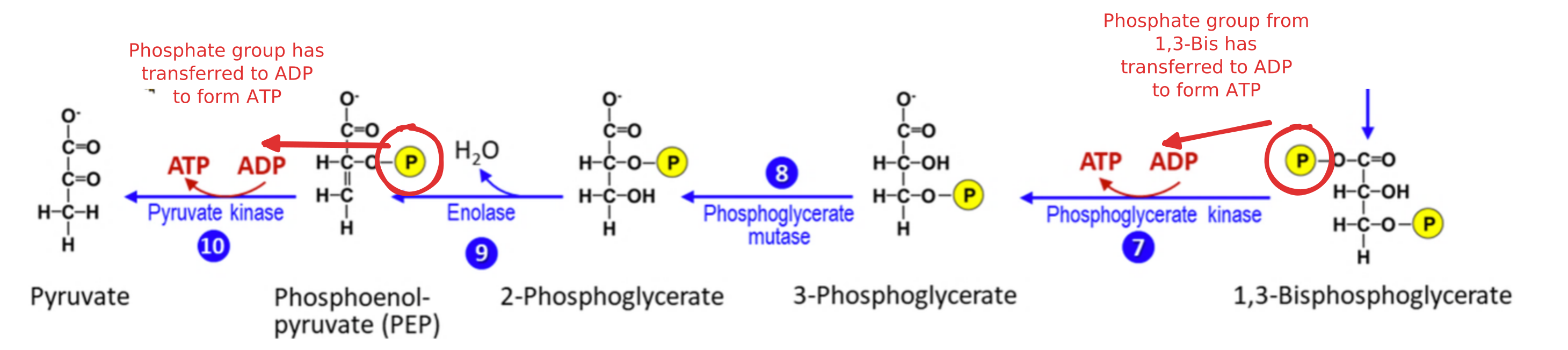
The phosphate group is directly transferred from a substrate molecule to ADP to form ATP.
- It occurs in:
- Glycolysis (oxidation step, where ATP is produced)
- Krebs cycle (from 5C to 4C Oxaloacetate)
Extra detail: Image
Images below show an example of substrate level phosphorylation, where the phosphate is transferred from the intermediates in glycolysis to ADP to form ATP. You don’t need to know these intermediates this is just to illustrate how it works.
Image modified – Glycolysis pathway 2.png by Eunice Laurent is licensed under the Creative Commons Attribution-ShareAlike 4.0 International (CC BY-SA 4.0) license.
Oxidative Phosphorylation
Oxidative phosphorylation occurs in the inner mitochondria membrane and produces lots of ATP! (much more than the other steps) Many enzymes and proteins involved with this process, e.g ATP synthase are present here.
This process is very similar to Light Dependent Reaction
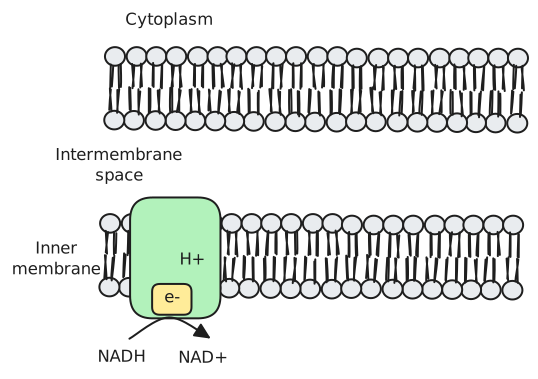
Hydrogen atoms provided by reduced NAD and FAD
- The reduced NAD and FAD transfer hydrogen atoms, which split into hydrogen ions (H+) and electrons to the electron transport chain. They are oxidised to become NAD and FAD.
Where are the reduced NAD & FAD from?
Where are the reduced NAD & FAD from?
All the other steps of respiration, including Glycolysis, Link reaction, and Krebs cycle.
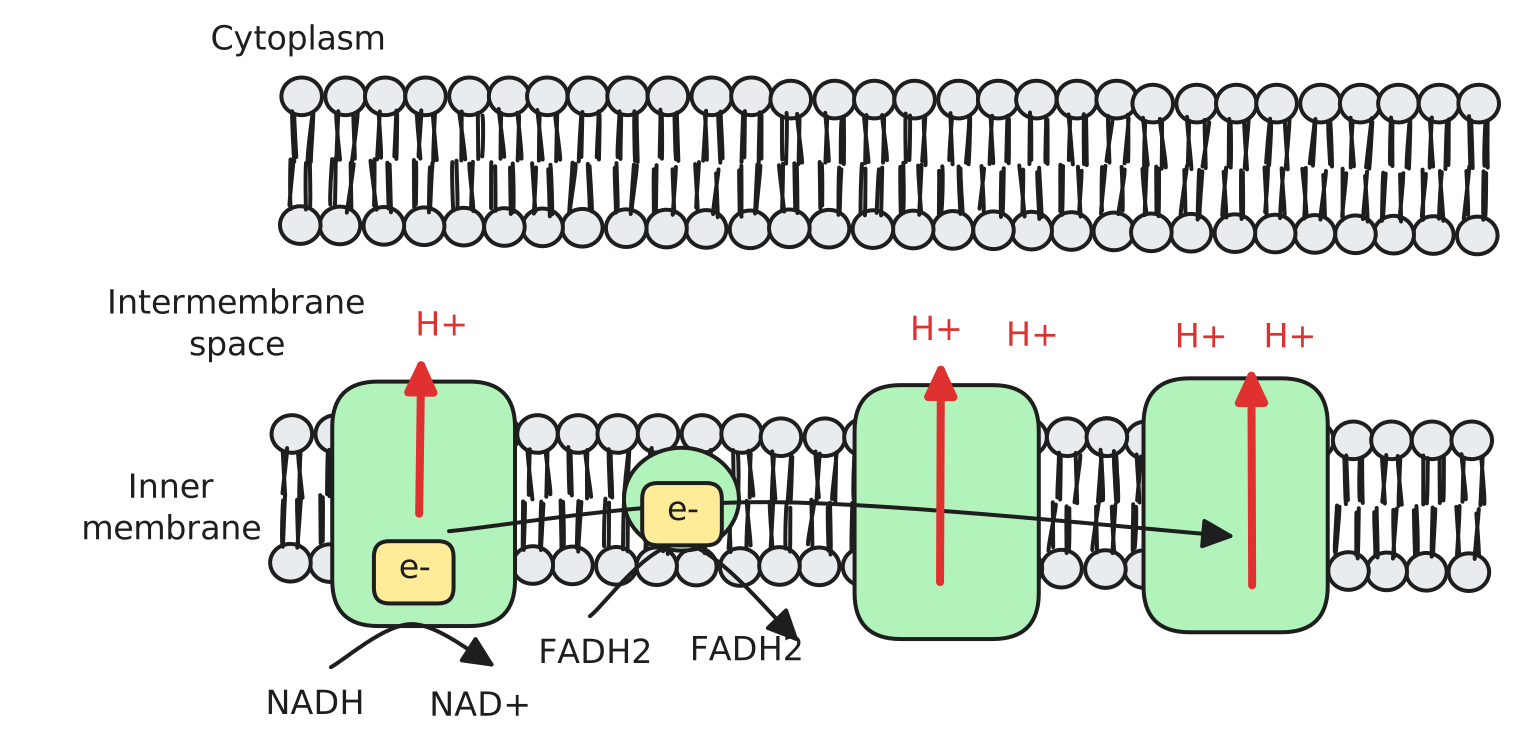
Electrons move down the electron transport chain
- Electrons lose energy at each carrier (move from a higher energy level to a lower energy level)
- This energy is used to pump the H+ ions out of the mitochondria matrix and into the intermembrane space.
- This establishes an electrochemical gradient, with a higher concentration of H+ ions in the intermembrane space than the matrix
What does electrochemical gradient mean?
What does electrochemical gradient mean?
- Combines two components (chemical and electrical) that drive proton flow
- Chemical gradient – Higher concentration of H+ ions in intermembrane space compared to matrix
- Electrical gradient – The accumulation of positively charged protons (H+) in intermembrane space creates a positive charge and a negative charge inside matrix
Chemiosmosis
- As the hydrogen ions move down their concentration gradient, they pass through an enzyme called ATP synthase. This movement of hydrogen ions drives the synthesis of ATP (from ADP + Pi)
Chemiosmosis
Process where the flow of protons (H+ ions) down an electrochemical gradient through ATP synthase powers the creation of ATP from ADP + Pi
Oxygen is the final acceptor of electrons
- At the end of the electron transport chain, electrons, protons/H+ ions, combine with oxygen to form water.
Anaerobic Respiration
What you need to know (based on the AQA specification)
What you need to know (based on the AQA specification)
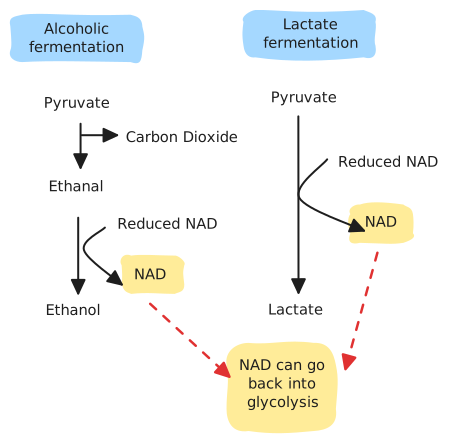
If respiration is only anaerobic, pyruvate can be converted to ethanol or lactate using reduced NAD. The oxidised NAD produced in this way can be used in further glycolysis.
In anaerobic respiration, there isn’t oxygen to be the final acceptor in the electron transport chain, so we need an alternative way to breakdown glucose. This is where the fermentation pathway comes in.
The first step is Glycolysis which breaks glucose down to pyruvate This pyruvate can be used in either a:
- Alcoholic fermentation (plants & yeast) - where pyruvate is converted to ethanol
- Lactate fermentation - where pyruvate is converted to lactate
Important (NAD)
The regenerated NAD can be used in glycolysis, which means that glycolysis can continue even without oxygen, so some (small amount) of ATP can be produced
Other respiratory substrates
The food you eat doesn’t just contain glucose, it contains other nutrients such as fats and proteins.
These can be broken down into:
- Fats: Glycerol & fatty acids
- Proteins: Amino acids
These can be converted into molecules that can enter the Krebs cycle (usually Acetyl CoA)
Exam Questions
Put a tick in the box next to the process that occurs in anaerobic respiration but does not occur in aerobic respiration.
Describe the process of glycolysis.
(4 marks)
Mark Scheme
- Phosphorylation of glucose using ATP (1 mark)
- Oxidation of triose phosphate to pyruvate (1 mark)
- Net gain of ATP (1 mark)
- NAD reduced (1 mark)
Tips from examiner reports
- Glycolysis: glucose → phosphorylated glucose (using ATP) → triose phosphate → pyruvate
- Triose phosphate is oxidised to pyruvate — say ‘oxidised’ not just ‘converted’ or ‘broken down’
- Net gain of 2 ATP per glucose — make this clear
- Reduced NAD is produced — mention this
- Don’t confuse glycolysis with glycogenesis, glycogenolysis, or gluconeogenesis
Malonate inhibits a reaction in the Krebs cycle.
Explain why malonate would decrease the uptake of oxygen in a respiring cell.
(2 marks)
Mark Scheme
- Less/no reduced NAD/coenzymes
OR Fewer/no hydrogens/electrons removed (and passed to electron transfer chain) (1 mark) - Oxygen is the final/terminal (electron) acceptor (1 mark)
Tips from examiner reports
- If the Krebs cycle is inhibited: fewer reduced coenzymes (reduced NAD/FAD) are produced → fewer electrons/hydrogen atoms enter the electron transfer chain → less oxygen needed as the final electron acceptor
- Oxygen is the final electron acceptor in the electron transfer chain — know this
- Don’t just say ‘anaerobic respiration would occur’ without explaining the mechanism
In muscles, pyruvate is converted to lactate during prolonged exercise.
Explain why converting pyruvate to lactate allows the continued production of ATP by anaerobic respiration.
(2 marks)
Mark Scheme
- Regenerates/produces NAD
OR oxidises reduced NAD (1 mark) - (So) glycolysis continues (1 mark)
Tips from examiner reports
- In anaerobic respiration (lactic acid fermentation): pyruvate accepts hydrogen from reduced NAD → NAD is REGENERATED → glycolysis can continue
- This does NOT involve the ETC, Krebs cycle or link reaction