Photosynthesis — Key Points
Overall equation: 6CO₂ + 6H₂O → C₆H₁₂O₆ + 6O₂ (requires light energy)
Light Dependent Reaction (thylakoid membrane)
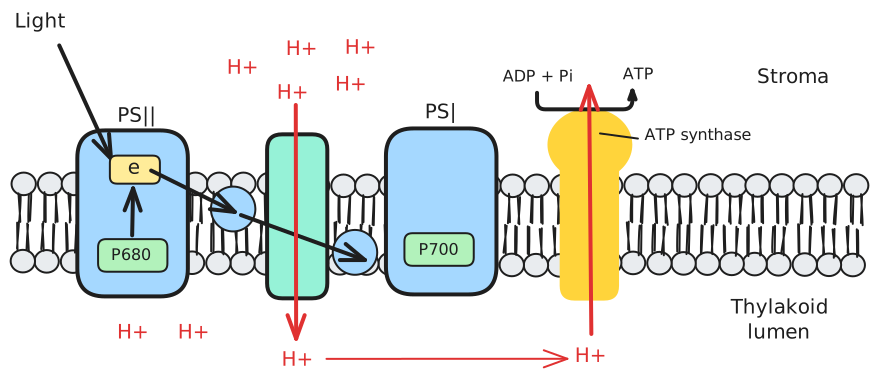
- Photoionisation: Chlorophyll in PSII absorbs light → electrons excited and are lost from chlorophyll (chlorophyll is oxidised)
- Photolysis: Lost electrons replaced by photolysis of water → H⁺ + e⁻ + O₂
- As these high energy electrons pass down electron transport chain they lose energy. This is energy used to pump H⁺ into thylakoid
- Chemiosmosis: H⁺ move down their concentration gradient from the thylakoid into stroma. They pass through ATP synthase in the membrane and their movement drives the production of ATP
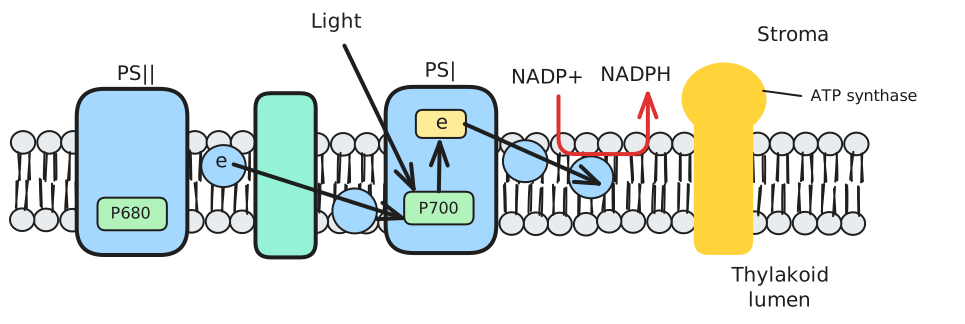
- NADPH formation: Light absorbed by chlorophyll in PS1, electrons become excited, pass down electron transport chain. At end of chain, NADP+ is joined by these electrons to be reduced to form NADPH
- Products: ATP, NADPH, O₂
- Important: ATP and NADPH are used in the light independent reaction (specifically reduction GP to TP)
Light Independent Reaction / Calvin Cycle (stroma)
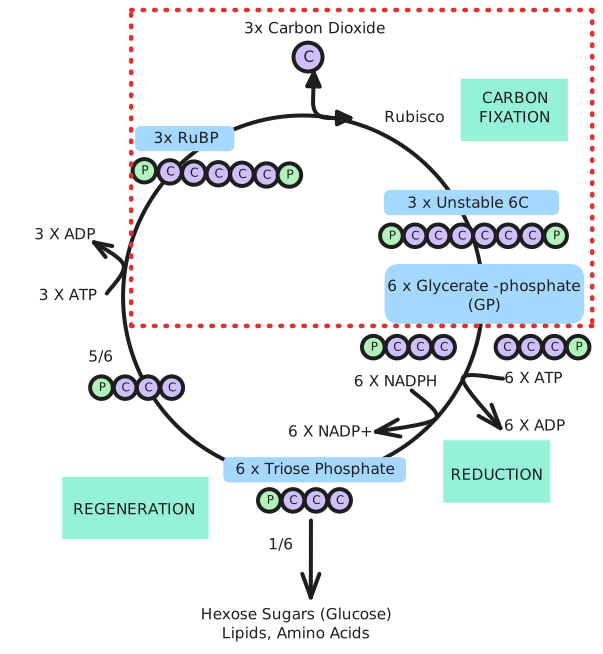
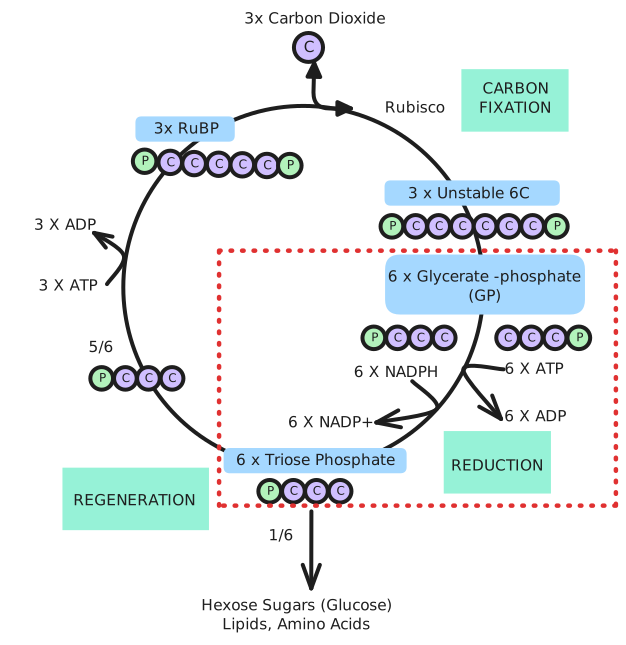
- Carbon fixation: CO₂ + RuBP (5C) → unstable 6C → 2x GP (3C), catalysed by Rubisco
- Reduction: GP reduced to TP using ATP (energy) and NADPH (electrons/hydrogen)
- Regeneration: 5/6 TP → regenerates RuBP (requires ATP); 1/6 TP → glucose, lipids, amino acids
- 6 turns needed for 1 glucose molecule
Limiting Factors
- Light intensity — needed for light dependent reaction
- CO₂ concentration — needed for Calvin cycle (carbon fixation)
- Temperature — affects enzymes (Rubisco, ATP synthase); too high = denaturation
Overview Photosynthesis
What is photosynthesis?
Photosynthesis is an essential process to all living organisms. The energy from light is converted into chemical energy (glucose), which is used to fuel the organism’s metabolic reactions.
Photosynthesis
What is the glucose used for?
What is the glucose used for?
- It can be used in respiration to produce ATP for energy-requiring processes in plants, such as growth and active transport.
- Glucose can be converted into other biological molecules, including starch for storage, cellulose for cell walls, and sucrose for transport in plants.
- Non-photosynthetic organisms, such as animals, obtain glucose by feeding on plants, which can then be used in respiration to generate ATP.
Do only plants carry out photosynthesis?
Do only plants carry out photosynthesis?
No, photosynthesis is also carried out by algae and a group of bacteria called cyanobacteria.
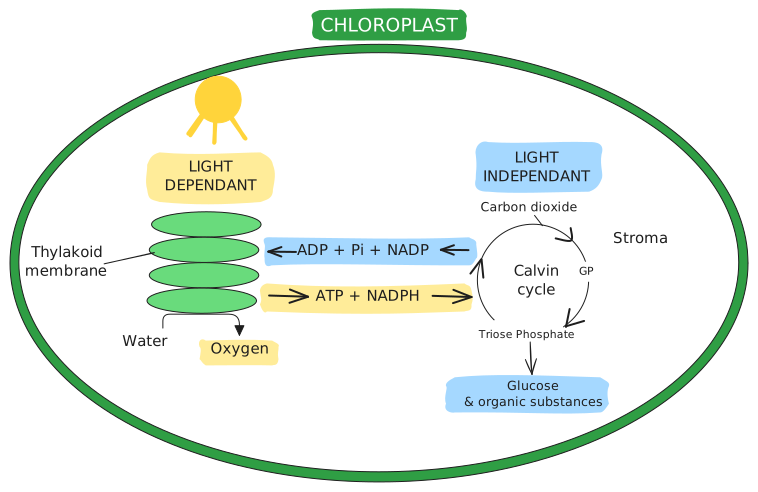
Summary: Photosynthesis has 2 main phases
- Light dependent
- Takes place on thylakoid membrane
- Requires light
- Chlorophyll absorbs this light energy and converts it into ATP and NADPH
- Water is converted (oxidised) to oxygen
- Light independent (also called Calvin Cycle)
- Takes place in the stroma
- Doesn’t require light
- Uses the ATP and NADPH from the light dependent reaction to fix carbon dioxide into GP, and then reduce it to triose phosphate.
- Some of this triose phosphate is used to regenerate RuBP (keep the Calvin cycle going)
- Some of triose phosphate is used to create glucose and other organic substances
Tip
Look at the diagram to understand how the light dependent and light independent reaction link together. For example, ATP and NADPH are passed from the light dependent reaction into the light independent reaction
Structure of Chloroplasts
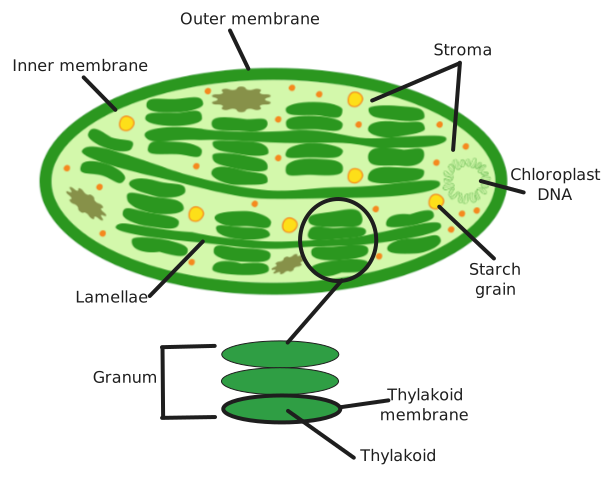
Photosynthesis generally takes place within the leaf, within chloroplast structures. Many of these structures within the chloroplasts are vital to photosynthesis
Inner / Outer membranes
- Chloroplasts are surrounded by a double membrane.
- This consists of an inner membrane and an outer membrane.
Stroma
- The stroma is a fluid-filled matrix inside the chloroplast.
- This is where the light-independent reaction takes place.
- It contains structures such as starch grains and chloroplast DNA.
Granum & thylakoids
- A granum (singular) is a stack of fluid-filled thylakoids.
- Grana (plural) are multiple stacks of thylakoids.
- The grana are linked together by lamellae (lamella is singular).
Thylakoid membrane
- The thylakoid membrane is the site of the light-dependent reaction.
- It contains photosynthetic pigments such as chlorophyll a and b.
- The electron transport chain is embedded in this membrane.
Light Dependent Reaction
What you need to know (based on the AQA specification)
What you need to know (based on the AQA specification)
The light-dependent reaction in such detail as to show that:
- chlorophyll absorbs light, leading to photoionisation of chlorophyll
- some of the energy from electrons released during photoionisation is conserved in the production of ATP and reduced NADP
- the production of ATP involves electron transfer associated with the transfer of electrons down the electron transfer chain and passage of protons across chloroplast membranes and is catalysed by ATP synthase embedded in these membranes (chemiosmotic theory)
- photolysis of water produces protons, electrons and oxygen
Light dependent reaction
Light dependent reaction makes ATP and NADPH and takes place in thylakoid membrane Called photophosphorylation as it uses light energy (photo) to make ATP from ADP (phosphorylation)
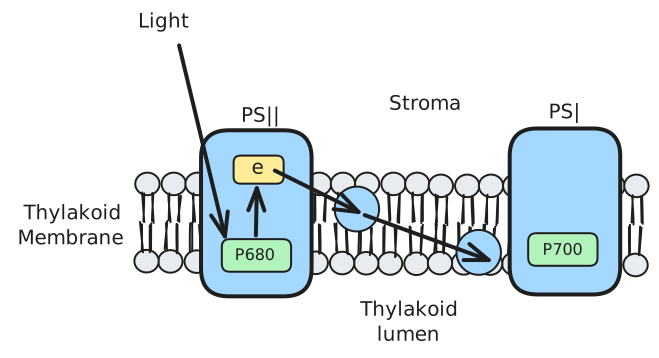
Photosystems - PSII & PS1
- Are large complexes made of proteins and pigments
- Pigments:
- PSII has a specialised pair of chlorophyll a molecules - P680, they absorb light best at wavelength of 680nm
- PS1 also has chlorophyll a molecules - P700, they absorb light best at wavelength of 700nm
- Note: It’s a little confusing due to the order they present
1 - Photoionisation
- Chlorophyll, located in PSII, absorbs light energy
- This light energy causes an electron in the chlorophyll (P680) to become ‘excited’
- These high energy electrons leave PSII and are passed along the electron transport chain, via electron carrier proteins to PS1
Break down the word 'Photoionisation'
- ‘Photo’ - Light
- ‘Ionisation’ - Atom / molecule acquires a negative or positive charge
- In this case the chlorophyll has lost an electron, it has become oxidised
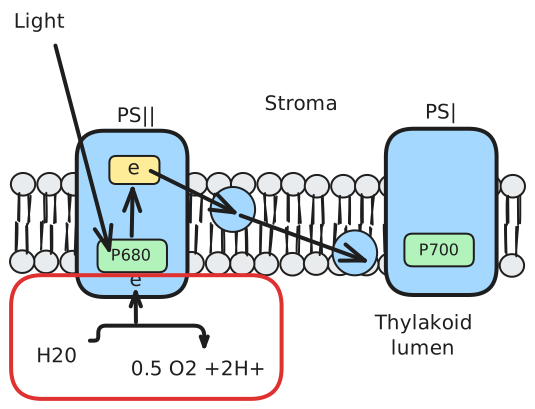
2 - Photolysis
- The electrons which have left the chlorophyll and passed to the electron carriers, need to be replaced
- Light energy is used to split water molecules into:
- Protons (H+)
- Electrons
- Oxygen $$ H_2O \xrightarrow{\text{light}} 2H^+ + 2e^- + \tfrac{1}{2}O_2 $$
Break down the word 'Photolysis'
- ‘Photo’ - Light
- ‘Lysis’ - Splitting/breaking down (of water by light)
3 - ATP Synthesis
- As these high energy electrons travel down the electron transport chain, they lose energy
- This energy is used to pump H+ ions (protons) from the stroma into the thylakoid
- Now, the thylakoid has a higher concentration of H+ ions (protons) than the stroma
- H+ ions will now move down their concentration gradient, from the thylakoid into the stroma
- H+ ions move through an enzyme ATP synthase embedded in the thylakoid membrane, and this movement drives the production of ATP.
- This process is known as chemiosmosis.
$$ ADP + P_i \xrightarrow{\text{ATP synthase}} ATP $$
What is the name for the type of movement of ions, in chemiosmosis?
What is the name for the type of movement of ions, in chemiosmosis?
Facilitated diffusion. It’s not active transport as it doesn’t require ATP; it produces ATP.
4 - NADPH Formation
- Light is also absorbed by PS1 (by p700 chlorophyll)
- This light energy causes an electron in the chlorophyll (P700) to become ‘excited’
- These high energy electrons leave PS1 and are passed along the electron transport chain.
- At the end of the chain is NADP+, which is joined by electrons travelling down the electron transport chain. This reduces NADP+ to NADPH
- The electrons from P700 in PS1 are replaced by electrons coming from PSII
$$ NADP^+ + 2H^+ + 2e^- \rightarrow NADPH + H^+ $$
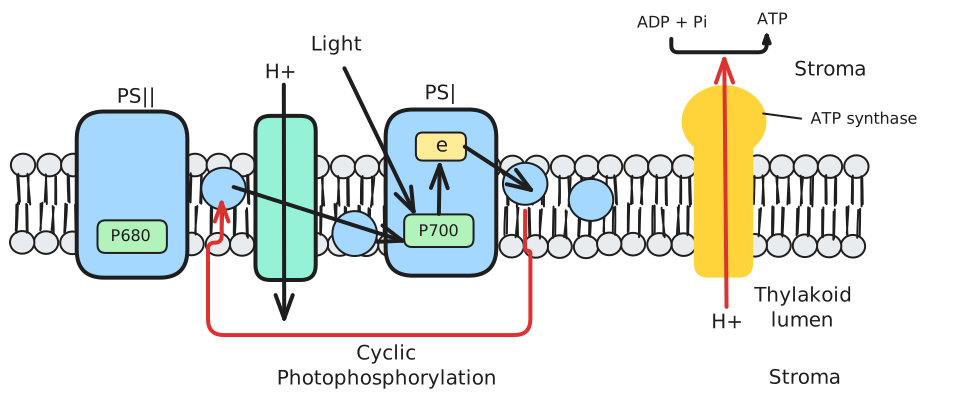
Cyclic Photophosphorylation
- The process described above can be called non-cyclic photophosphorylation, where the electrons flow from PSII to PS1 - in one direction. There is another less common form of photophosphorylation known as, cyclic photophosphorylation
- As the name suggests it goes in a circle, where electrons only pass through PS1 but not PSII (see image)
- No NADPH is produced
- Only a small amount of ATP is produced
Light Independent Reaction
Overview
What you need to know (based on the AQA specification)
What you need to know (based on the AQA specification)
The light-independent reaction uses reduced NADP from the light-dependent reaction to form a simple sugar. The hydrolysis of ATP, also from the light-dependent reaction, provides the additional energy for this reaction.
- As the name suggests, light is not required for this reaction.
- The 2 products from the light dependent reaction are essential to this reaction
- ATP: Hydrolysis of ATP releases energy to reduce GP to Triose Phosphate
- Reduced NADP+ (NADPH): Provides electrons to reduce GP to Triose Phosphate
- Carbon dioxide is also required for this reaction. It enters through the stomata and diffuses into the chloroplast (stroma)
Carbon Fixation
What you need to know (based on the AQA specification)
What you need to know (based on the AQA specification)
Carbon dioxide reacts with ribulose bisphosphate (RuBP) to form two molecules of glycerate 3-phosphate (GP). This reaction is catalysed by the enzyme rubisco
- Carbon dioxide reacts with ribulose bisphosphate (RuBP) to form an unstable 6C compound, which splits into two molecules of glycerate-3-phosphate (GP)
- The enzyme rubisco catalyses this reaction
Reduction
What you need to know (based on the AQA specification)
What you need to know (based on the AQA specification)
ATP and reduced NADP from the light-dependent reaction are used to reduce GP to triose phosphate
- NADPH from the light dependent reaction is used to reduce GP into triose phosphate. It does this by donating a hydrogen (electron) to the GP
- ATP hydrolysis releases energy required for GP to be reduced to triose phosphate
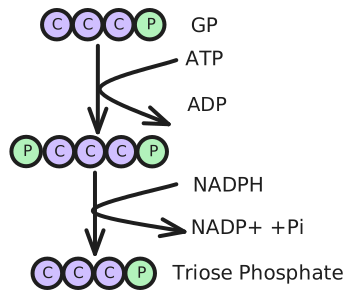
More details on this process
- ATP phosphorylates GP, adding a second phosphate group.
- Reduced NADP (NADPH) reduces GP, releasing inorganic phosphate (Pi) and forming triose phosphate.
- You do not need to memorise this diagram or the intermediate compound; it is included to help understanding.
Regeneration
What you need to know (based on the AQA specification)
What you need to know (based on the AQA specification)
- Some of the triose phosphate is used to regenerate RuBP in the Calvin cycle
- Some of the triose phosphate is converted to useful organic substances.
- Regenerating RuBP (5/6):
- Some of the triose phosphate is used to regenerate RuBP in the Calvin cycle.
- This is 5 out of every 6 molecules of triose phosphate
- Requires ATP
- Converted to useful organic substances (1/6):
- This is 1 out of every 6 molecules of triose phosphate
- Useful substances include: Glucose, Amino acids, Lipids
- Triose phosphate can be converted into glycerol
- Glycerol combines with fatty acids to form lipids
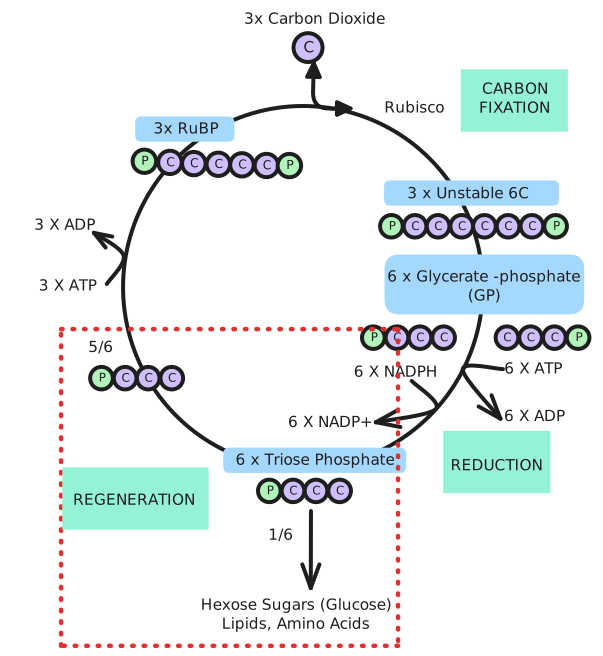
How many turns of this cycle would it take to produce 1 molecule of glucose?
How many turns of this cycle would it take to produce 1 molecule of glucose?
- 6 turns
- Why? Every 3 turns produces 1 triose phosphate (3C). A glucose molecule has 6 carbons, so you need 2 triose phosphate molecules (2 x 3C = 6C), which requires 6 turns. These can then combine to form glucose.
Limiting Factors
What you need to know (based on the AQA specification)
What you need to know (based on the AQA specification)
- identify environmental factors that limit the rate of photosynthesis
- evaluate data relating to common agricultural practices used to overcome the effect of these limiting factors.
What is a limiting factor?
A limiting factor (with regards to photosynthesis) is a condition that can stop or slow down the rate of photosynthesis, even if all other required resources are at optimal supply.
3 factors which affect the rate of photosynthesis
- Light intensity
- Needed for light dependent reaction
- Photosynthetic pigments (e.g. chlorophyll) can absorb different wavelengths of light
- Carbon Dioxide Concentration
- Needed for the light independent reaction (Calvin cycle)
- Temperature
- As photosynthesis involves many enzymes (e.g ATP synthase from light dependent, Rubisco from light independent), the temperature can affect these enzymes. Too high and it can denature them, too low and there isn’t enough kinetic energy for the reaction occur (less collisions between enzymes and substrates, less substrate enzyme complexes formed)
Light Intensity Example Graphs
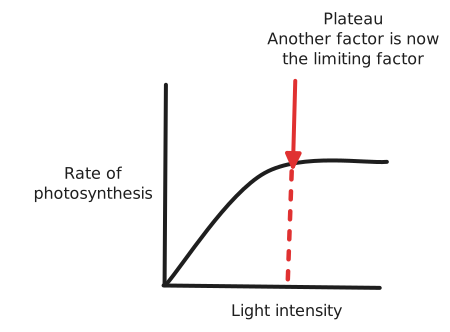
Explain the light intensity graph
Explain the light intensity graph
At low light intensities, light is the limiting factor, so increasing light intensity increases the rate of photosynthesis.
When the graph levels off (plateaus), increasing light intensity has no further effect because another factor becomes limiting, such as carbon dioxide concentration or temperature.
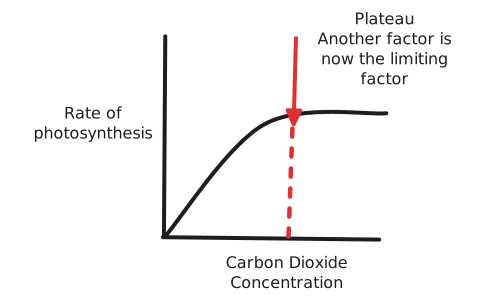
Explain the carbon dioxide concentration graph
Explain the carbon dioxide concentration graph
At low carbon dioxide concentrations, carbon dioxide is the limiting factor, so increasing its concentration will increase the rate of photosynthesis.
When the graph plateaus (levels off) carbon dioxide is no longer the limiting factor and another factor, such as light intensity or temperature, limits the rate.
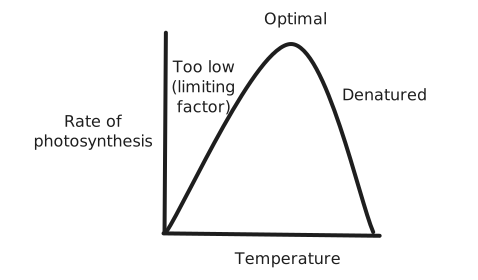
Explain the temperature graph
Explain the temperature graph
At low temperatures, temperature is the limiting factor, so increasing temperature increases the rate of photosynthesis.
After the optimum temperature is reached (highest point on the graph) the rate of photosynthesis decreases because enzymes involved in photosynthesis become denatured.
- Common agricultural practices aim to ensure they can optimise the rate of photosynthesis for their crops, controlling limiting factors such as carbon dioxide concentration, light and temperature.
- Example of this includes:
- Light intensity: Greenhouses (glass) to allow more light to enter or artificial lighting
- Carbon dioxide: Increase carbon dioxide in greenhouse air, using propane or natural gas burners
- Temperature: Greenhouses allow sunlight to enter but heat cannot easily escape, so increases the temperature
Things to consider in an evaluate question
- When it works (e.g. to increase a limiting factor)
- When it might not work (e.g there might be another limiting factor),
- Cost/efficiency (e.g fuel costs)
Exam Questions
In photosynthesis, which chemicals are needed for the light-dependent reaction?
Describe what happens during photoionisation in the light-dependent reaction
(2 marks)
Hint
Think about what happens to the electrons in chlorophyll when light is absorbed.
Mark Scheme
- Chlorophyll absorbs light (energy) / electrons excited/raised to higher energy level (1 mark)
- Electrons lost from chlorophyll / chlorophyll becomes (positively) ionised/charged (1 mark)
Tips from examiner reports
- Photoionisation: chlorophyll absorbs light → electrons excited → lost from chlorophyll → chlorophyll becomes positively charged
- ‘Photolysis’ alone was not credited — photolysis is the splitting of water, not photoionisation
- Referring only to chloroplasts/photosystems (not chlorophyll) did not score
Describe how the products of the light-dependent reaction are used in the light-independent reaction to produce triose phosphate. Do not include the role of ribulose bisphosphate (RuBP) in your answer.
(3 marks)
Hint
Name the two products from light-dependent reactions used in the Calvin cycle. What does each one provide for the conversion of GP to TP?
Mark Scheme
- ATP and reduced NADP (1 mark)
- ATP provides energy (1 mark)
- GP reduced to triose phosphate (1 mark)
Tips from examiner reports
- The light-dependent reaction produces ATP and reduced NADP — both are used in the light-independent reaction
- Reduced NADP reduces GP to TP — this is a reduction, not an oxidation
- Say ‘reduced NADP’ not ‘reduced NAD’ — they are different molecules
- Don’t confuse molecules from photosynthesis with those from respiration (pyruvate, acetyl CoA)
- GP is glycerate 3-phosphate — if you name it, get the name right
Describe the light-independent reaction of photosynthesis.
(6 marks)
Mark Scheme
- Carbon dioxide combines/reacts with ribulose bisphosphate/RuBP (1 mark)
- Produces two glycerate (3-)phosphate/GP using (enzyme) Rubisco (1 mark)
- GP reduced to triose phosphate (1 mark)
- Using reduced NADP (1 mark)
- Using energy from ATP (1 mark)
- Triose phosphate converted to glucose/hexose/RuBP/ribulose bisphosphate/named organic substance (1 mark)
Tips from examiner reports
- In the Calvin cycle: CO₂ + RuBP → GP → TP → useful organic molecules
- Reduced NADP reduces GP to TP — it’s a reduction, not oxidation
- Say ‘reduced NADP’ not ‘reduced NAD’
- Write ‘triose phosphate’ in full at least once — don’t just use ‘TP’ throughout
- GP stands for glycerate 3-phosphate — don’t call it ‘glucose phosphate’
- ATP releases energy for the reduction of GP
- Don’t describe the light-dependent reaction when asked about the light-independent reaction