What you need to know (based on the AQA specification)
What you need to know (based on the AQA specification)
Amino acids are the monomers from which proteins are made. The general structure of an amino acid where NH2 represents an amine group, COOH represents a carboxyl group and R represents a side chain. The twenty amino acids that are common in all organisms differ only in their side group.
Amino Acids
Amino acids are monomers that make up proteins. A chain of these amino acids is called a polypeptide.
Amino acids have the same general structure
- COOH - carboxyl group
- $NH_2$ - amino group
- R group - side chain
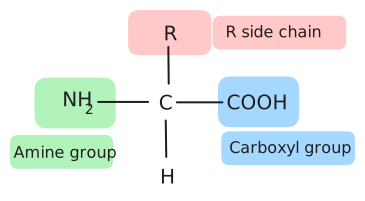
This R group gives the amino acid specific properties and determines the identity of the amino acid. For example, if the R group is a hydrogen atom, then the amino acid is glycine. Whereas, if the R group is $CH_3$, the amino acid is alanine.
There are 20 different types of amino acids found in proteins
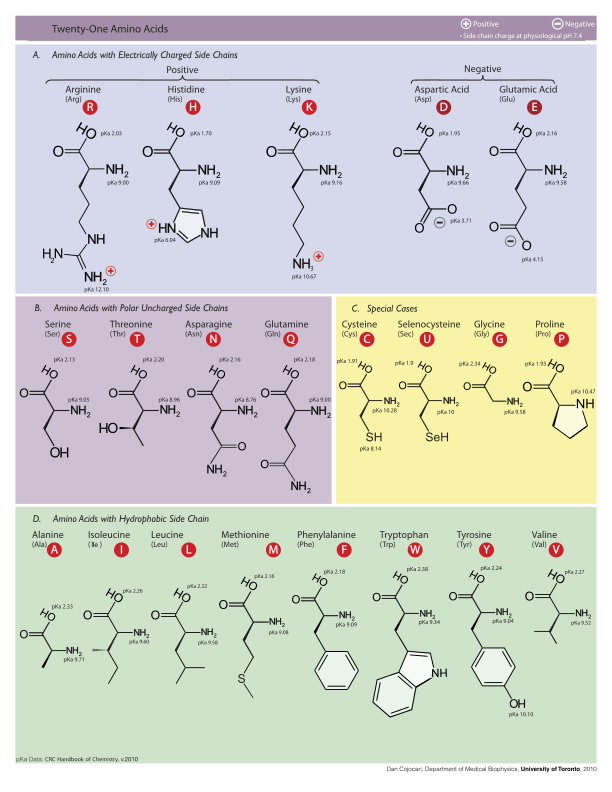
Image: ProteinogenicAminoAcids.svg by Dan Cojocari, licensed under CC BY-SA 4.0
The R group can determine the amino acid’s properties, e.g. whether it is polar or non-polar.
R-groups that are hydrophobic (water-hating/non-polar) tend to fold inwards, away from water. R-groups that are hydrophilic (water-loving/polar) stay on the outside where they can interact with water. This helps determine how the protein folds into its final shape.
Peptide Bond
What you need to know (based on the AQA specification)
What you need to know (based on the AQA specification)
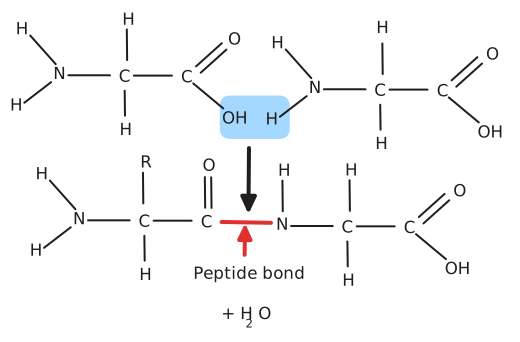
A condensation reaction between two amino acids forms a peptide bond. Dipeptides are formed by the condensation of two amino acids. Polypeptides are formed by the condensation of many amino acids. A functional protein may contain one or more polypeptides.
Two amino acids can be joined together to form a dipeptide and many amino acids (more than two) can form a chain of amino acids called a polypeptide.
How are these amino acids linked together?
- By a condensation reaction which joins the amino acids with a peptide bond (it’s a type of covalent bond)
- Water is released
Structure of Protein
What you need to know (based on the AQA specification)
What you need to know (based on the AQA specification)
Proteins have a variety of functions within all living organisms. The relationship between primary, secondary, tertiary and quaternary structure, and protein function. The role of hydrogen bonds, ionic bonds and disulfide bridges in the structure of proteins.
There are 4 main levels of protein structure: Primary, Secondary, Tertiary & Quaternary
Primary
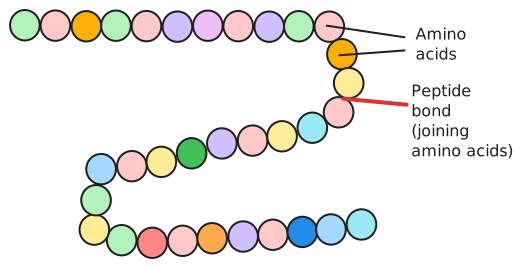
Simplest protein structure and is simply a sequence of amino acids in a polypeptide chain A change in the DNA sequence, for example a gene mutation, can (not always) lead to a change in this amino acid sequence.
Secondary
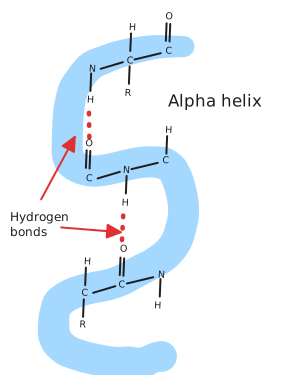
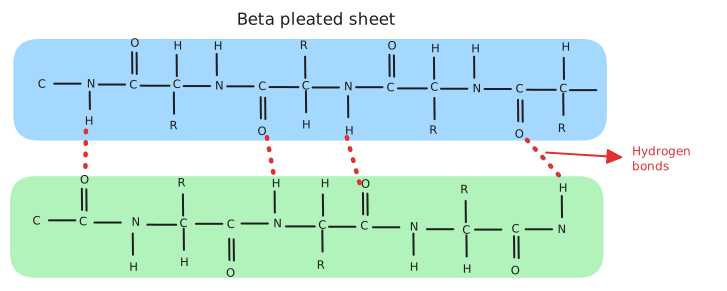
- The polypeptide chain (primary structure) starts to fold, with hydrogen bonds forming between the amino acids in the chain
- The carbonyl oxygen (C=O) of one amino acid (negative charge) forms a hydrogen bond with the amide hydrogen (N-H) (positive charge), see images below
- Does not include bonding between the R groups (that is tertiary)
The most common types of secondary structure are:
-
Alpha helix
- Spiral coiled structures
- Hydrogen bonds occur within the same chain
-
Beta pleated sheet
- Beta strands aligned side by side
- Hydrogen bonds connect adjacent strands
Tertiary
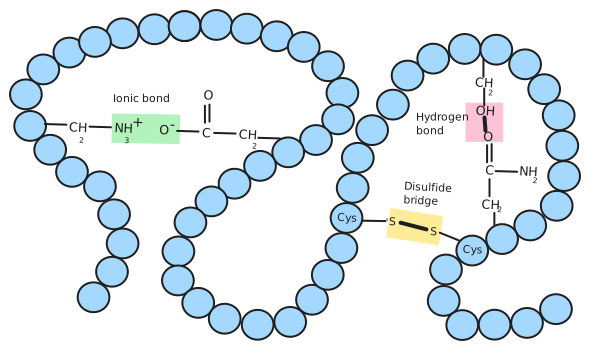
- The secondary structure can be folded even further to form the tertiary structure of a protein. This process is known as protein folding.
- This involves bonding between R groups of the amino acids and can include, in order from the strongest type of bond to weakest bond
- Disulphide bridges
- Strong covalent bond in protein’s tertiary structure
- Between sulphur atoms of cysteine side chain
- Ionic bonds
- Between oppositely charged R groups
- Weaker than disulphide and can be broken by changes in pH
- Hydrogen bonds
- Disulphide bridges
- The 3D shape of a protein is important as it determines the function of the protein. If a protein loses its 3D shape (often due to denaturing) it may become non-functional (i.e it won’t work as expected). For example, if the protein is an enzyme it loses the shape of its active site so it can no longer bind to its substrate
Quaternary
- Involves proteins which are made from more than one polypeptide chain
- Haemoglobin is an example, where its quaternary structure has 4 protein subunits: 2 alpha and 2 beta types with a haem prosthetic group. This haem group contains iron for binding to oxygen
- Quaternary structures have similar types of interactions as tertiary structures (i.e disulphide, ionic, hydrogen bonds) which enable the subunits to be held together
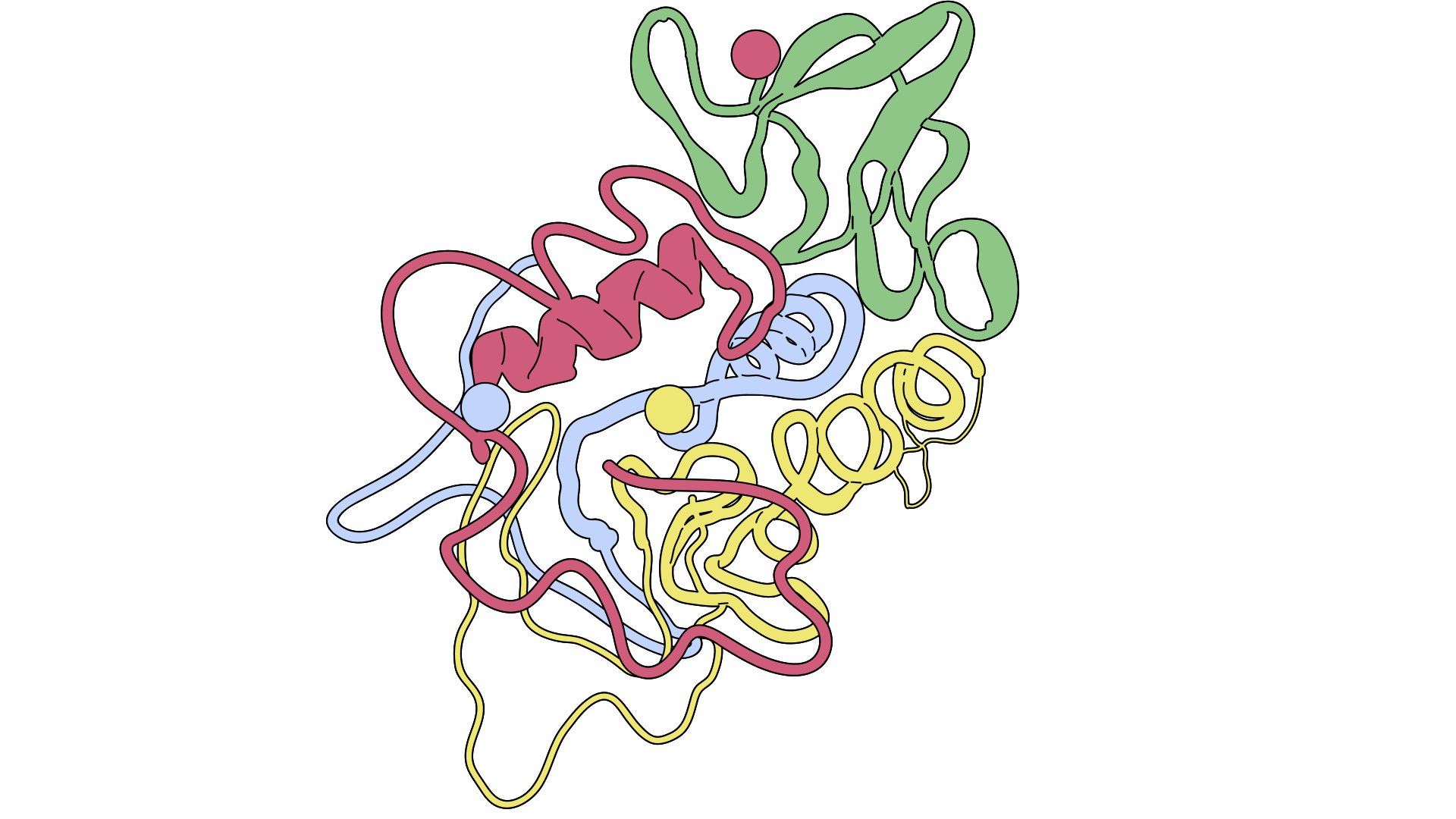
Protein Examples
There are many different examples of proteins, you will come across in this course. It’s important to think about how their structure will determine function. Some examples below:
-
Enzymes – have a specific active site that binds to a substrate to form an enzyme–substrate complex. Their precise 3D shape allows them to catalyse (speed up) biochemical reactions.
-
Haemoglobin – has a quaternary structure made of four subunits, each containing a haem group with an iron ion. This structure allows it to bind and transport oxygen in the blood.
-
Antibodies – have a specific variable region with a complementary shape to an antigen. This allows them to bind specifically to pathogens in the immune response.
-
Channel proteins – form hydrophilic pores in cell membranes, allowing specific ions or molecules to move across by facilitated diffusion.
-
Carrier proteins – specialised membrane proteins that change shape to move molecules across the cell membrane.
Biuret Test
What you need to know (based on the AQA specification)
What you need to know (based on the AQA specification)
The biuret test for proteins.
Overview
- We can use a Biuret test to test for proteins.
- This detects the presence of a peptide bond
High level method
- Prepare the sample to test, it needs to be a liquid. If the sample is solid, grind it in distilled water using a mortar and pestle to form a suspension.
- Add sodium hydroxide solution - this ensures it is alkaline
Why is it important to be alkaline?
Why is it important to be alkaline?
The Biuret test requires a reaction between copper ions and nitrogen atoms within the peptide bonds. When the solution is alkaline, the nitrogen atoms are without H+ ions (deprotonated), allowing them to bind to copper ions and form a purple/violet complex.
- Add copper II sulfate solution
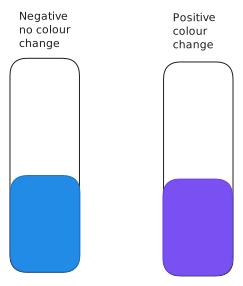
- If peptide bond is present the solution will turn purple, if not it will remain blue